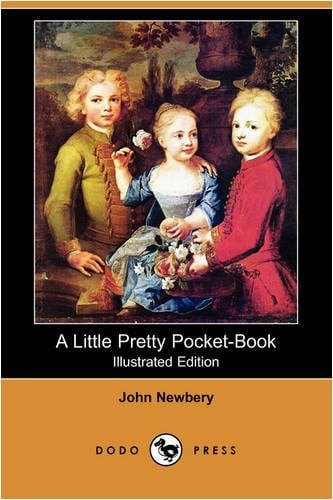
About This Book
"A Little Pretty Pocket-book" by John Newbery holds a unique place in literary history as arguably the first children's book, originally published in 1744. Designed for "Little Master Tommy and Pretty Miss Polly," it features simple alphabet rhymes, moral lessons, and descriptions of period games, including the earliest known reference to "baseball" (then known as rounders). For parents, this book offers a fascinating glimpse into 18th-century childhood and the origins of children's literature. It's less a narrative and more a collection of educational and amusing snippets, perfect for sparking discussions about history, language evolution, and how children played centuries ago.
John Newbery (1713-1767) was a British publisher of books who first made children's literature a sustainable and profitable part of the literary market. He also supported and published the works of Christopher Smart, Oliver Goldsmith and Samuel Johnson. In honour of his achievements in children's publishing, the Newbery Medal was named after him. By 1740 he had started publishing books in Reading, Berkshire; his first two publications were an edition of Richard Allestree's The Whole Duty of Man and Miscellaneous Works Serious and Humerous in Verse and Prose. In 1743, Newbery left Reading, putting his stepson John Carnan in charge of his business there, and established a shop in London. The first book he published there was A Little Pretty Pocket-Book in 1744. Scholars have speculated that Oliver Goldsmith or Giles and Griffith Jones wrote one of Newbery's best-selling stories, The History of Little Goody Two-Shoes. This was Newbery's most popular book, going through 29 editions between 1765 and 1800. Newbery also published a series of books written by "Tom Telescope" that were wildly popular, going through seven editions between 1761 and 1787 alone.
Discussion Prompts
1
How are the rhymes in this book similar to or different from rhymes you know today?
2
What do you think it was like to be a child in the 1700s, based on this book?
3
The book mentions "baseball." How is the game described here different from modern baseball?
4
Why do you think books like this were important for children long ago?
5
What kind of "amusement" do you think kids found in these rhymes and games?
External Reviews
If Your Family Enjoyed This
Reviews
No reviews yet — be the first to share how this book landed with your family.