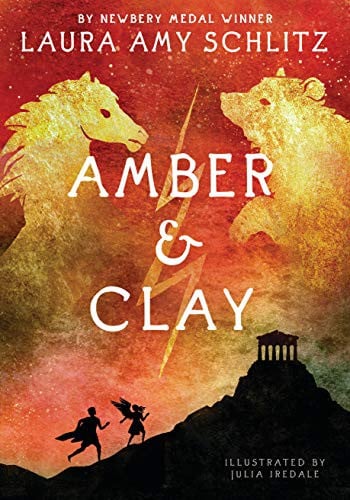
About This Book
Laura Amy Schlitz, a Newbery Medalist, delivers a masterful verse novel set in ancient Greece, suitable for readers aged 4-11. The story follows Rhaskos, a Thracian slave with a passion for art and philosophy, and Melisto, a willful aristocrat serving Artemis. Though they never meet in life, their destinies are profoundly intertwined, culminating in a unique friendship that transcends the boundaries of life and death. Blending poetry, prose, and archaeological "artifacts," the book delves into complex themes of social class, freedom, loss, and the enduring power of human connection. Parents should be prepared for discussions about slavery, death, and the roles of gods in ancient society.
The Newbery Medal–winning author of Good Masters! Sweet Ladies! gives readers a virtuoso performance in verse in this profoundly original epic pitched just right for fans of poetry, history, mythology, and fantasy. Welcome to ancient Greece as only genius storyteller Laura Amy Schlitz can conjure it. In a warlike land of wind and sunlight, “ringed by a restless sea,” live Rhaskos and Melisto, spiritual twins with little in common beyond the violent and mysterious forces that dictate their lives. A Thracian slave in a Greek household, Rhaskos is as common as clay, a stable boy worth less than a donkey, much less a horse. Wrenched from his mother at a tender age, he nurtures in secret, aided by Socrates, his passions for art and philosophy. Melisto is a spoiled aristocrat, a girl as precious as amber but willful and wild. She’ll marry and be tamed—the curse of all highborn girls—but risk her life for a season first to serve Artemis, goddess of the hunt. Bound by destiny, Melisto and Rhaskos—Amber and Clay—never meet in the flesh. By the time they do, one of them is a ghost. But the thin line between life and death is just one boundary their unlikely friendship crosses. It takes an army of snarky gods and fearsome goddesses, slaves and masters, mothers and philosophers to help shape their story into a gorgeously distilled, symphonic tour de force. Blending verse, prose, and illustrated archaeological “artifacts,” this is a tale that vividly transcends time, an indelible reminder of the power of language to illuminate the over- and underworlds of human history.
Discussion Prompts
1
How do Rhaskos and Melisto's lives reflect the different social classes in ancient Greece?
2
What role do the gods and goddesses play in the characters' lives and destinies?
3
How does the book explore the idea of connection, even when characters never meet in person?
4
What does the story teach us about resilience and finding your passion, even in difficult circumstances?
5
How does the author use poetry and "artifacts" to tell this story in a unique way?
External Reviews
If Your Family Enjoyed This
Reviews
No reviews yet — be the first to share how this book landed with your family.