About This Book
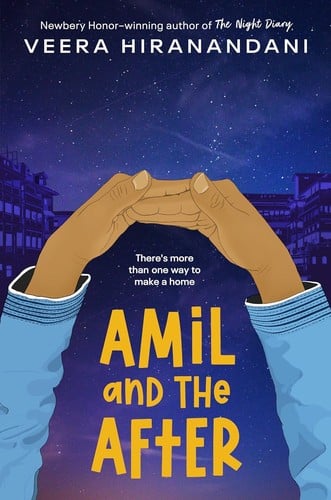
Set in 1948, 'Amil and After' tells the poignant story of twelve-year-old Amil, who, with his family, is trying to build a new life in Bombay, India, following the harrowing journey from their former home in what is now Pakistan. Amil, of mixed Muslim and Hindu heritage, grapples with a profound sense of displacement and uncertainty about what 'home' truly means. His twin sister, Nisha, suggests he channel his feelings into drawings for their mother, who passed away when they were infants. This narrative offers a sensitive exploration of historical events, cultural identity, and the resilience of the human spirit, making it an excellent choice for discussions about history, empathy, and coping with change.
At the turn of the new year in 1948, Amil and his family are trying to make a home in India, now independent of British rule. Both Muslim and Hindu, twelve-year-old Amil is not sure what home means anymore. The memory of the long and difficult journey from their hometown in what is now Pakistan lives with him. And despite having an apartment in Bombay to live in and a school to attend, life in India feels uncertain. Nisha, his twin sister, suggests that Amil begin to tell his story through drawings meant for their mother, who died when they were just babies. Through Amil, readers witness the unwavering spirit of a young boy trying to make sense of a chaotic world, and find hope for himself and a newly reborn nation.
Discussion Prompts
1
How does Amil's mixed heritage (Muslim and Hindu) influence his sense of identity and belonging in post-Partition India?
2
Nisha suggests Amil draw his story for their mother. How does art help Amil process his feelings and memories?
3
What does 'home' mean to Amil at the beginning of the book, and how does his understanding of it change by the end?
4
The book is set during a time of great change for India. How do the historical events of the Partition impact Amil and his family personally?
5
What examples of resilience and hope do you see in Amil's family and in the wider community described in the book?
External Reviews
If Your Family Enjoyed This
Reviews
No reviews yet — be the first to share how this book landed with your family.