About This Book
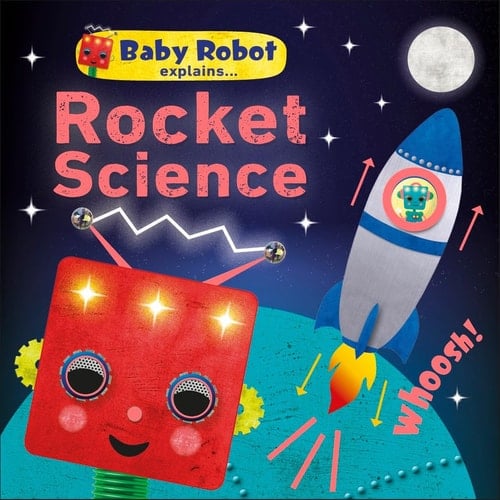
Baby Robot Explains... Rocket Science is a delightful picture book designed to introduce young children (ages 4-11) to the basics of rocket science and space travel. Through the curious Baby Robot and his knowledgeable friend Rose-bot, the book humorously explores various ways to reach space, debunking common misconceptions before clearly explaining the principles of rocket propulsion. Written with the help of a science education consultant, it combines an entertaining story with accessible scientific explanations and engaging illustrations, making complex ideas digestible. This book is perfect for sparking curiosity, building science vocabulary, and fostering early STEM confidence in a fun, read-aloud format.
Help your little one learn first science concepts with Baby Robot Explains Rocket Science. Baby Robot is a brilliant scientist in the making. He wants to know how to fly to the moon, so Rose-bot tells him about rocket science. Together they show us that it's never too early (or late ) to learn about big ideas, and build confidence in science. A fun picture book to read aloud, Baby Robot Explains ... Rocket Science has bright, engaging, and humorous pictures that make the topic accessible, an entertaining story to follow, and very simple scientific explanations written with the help of leading science education consultant Lisa Burke. Based on his first-hand experience of the world, Baby Robot has lots of suggestions for how he could reach space. Rose-bot explains why he can't climb, or fly there in a hot-air balloon, a plane, or a helicopter. She knows you need a rocket to fly to space, and she tells Baby Robot all about how space rockets work. The first title in a series of science, technology, engineering, and math books for babies (and anyone else, young or old, who wants to know about these amazing subjects), Baby Robot Explains... Rocket Science perfectly combines a picture book approach that brings the subject to life and is great for sharing, with clear, easy-to-follow scientific explanations. Your little one will learn science vocabulary, develop their thinking skills and problem solving, and build their confidence in science--ready for a lifetime of fun and fascinating STEM learning, or even a cool STEM career.
Discussion Prompts
1
What was Baby Robot's funniest idea for getting to the moon?
2
What did you learn about how rockets work?
3
If you could go to space, where would you want to visit?
4
What other big science questions do you have?
5
Why do you think it's important to learn about science?
External Reviews
If Your Family Enjoyed This
Reviews
No reviews yet — be the first to share how this book landed with your family.