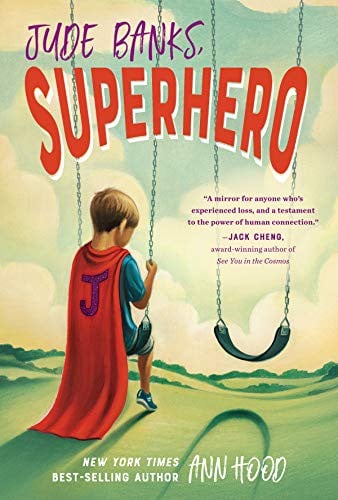
About This Book
Ann Hood's 'Jude Banks, Superhero' is a deeply moving chapter book exploring the profound grief of a twelve-year-old boy, Jude, after the sudden death of his older sister, Katie. Jude carries immense guilt, believing he caused her death, while his parents are consumed by their own sorrow. The narrative follows Jude as he navigates a world turned upside down, attending a grief youth group where he meets Clementine, another child who has lost a sibling. This story beautifully portrays the complexities of family grief, the isolating nature of loss, and the slow, arduous path towards healing and finding connection. It's suitable for readers aged 8-12 who are ready for a thoughtful, emotional journey about processing loss and finding resilience.
New York Times best-selling author Ann Hood pens a poignant story of grief and resilience, perfect for readers of The Line Tender and The Thing About Jellyfish. Katie was Jude's favorite person in the world. And not many brothers say that about their sister and mean it. But to Jude, Katie was everything--the person who made him learn how to say "I love you" in every language, who performed dramatic readings of Romeo and Juliet, who obsessed over every item on the diner menu looking for the most authentic diner meal. The one who called him "Jude Banks, Superhero," because to her, Jude was the best. She was also the person who died. Out of nowhere, and without a goodbye. And Jude believes he was the one who killed her. Now, twelve-year-old Jude must figure out what life looks like without his favorite person. With Mom checked out, and Dad just trying to do his best, Jude enters a world of grief youth groups and dropped-off lasagnas. It's only when he meets a girl named Clementine, who also lost a sibling, that he begins to imagine a world where maybe things might be okay. But Clementine is nursing a terrible guilt, and even though Katie called Jude a "superhero," he isn't sure he can save her. In her signature prose, Hood crafts an extraordinary story of grief and resilience, asking the important question: How does a family begin to heal?
Discussion Prompts
1
How does Jude's understanding of being a 'superhero' change throughout the story?
2
What are some different ways Jude's family members cope with Katie's death? How do their coping mechanisms affect each other?
3
The book explores feelings of guilt. What makes Jude feel guilty, and how does he begin to deal with those difficult feelings?
4
How does meeting Clementine help Jude, even though she has her own struggles with loss?
5
What does the book teach us about grief and how people find their way to healing?
External Reviews
If Your Family Enjoyed This
Reviews
No reviews yet — be the first to share how this book landed with your family.