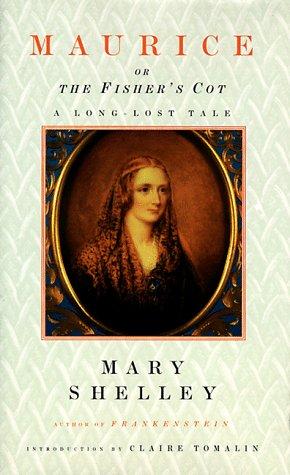
About This Book
This fascinating book presents a recently rediscovered children's story by Mary Wollstonecraft Shelley, author of 'Frankenstein,' written in 1820. 'Maurice, or the Fisher's Cot' is a moral tale for children, yet it carries a poignant undertone reflecting Shelley's personal grief at the time of its composition. The story follows a young boy, Maurice, who has lost his parents and is grappling with his identity and place in the world. It explores themes of loss, belonging, and the enduring power of family, culminating in a bittersweet ending. The book includes a comprehensive introduction by biographer Claire Tomalin, offering rich historical and psychological context for both the story and Shelley's life. Ideal for parents seeking a historically significant read that gently addresses complex emotions.
In the fall of 1997, in a palazzo in the Tuscan Hills north of Florence, a small booklet sewn into paper covers turned up in a long-unopened crate of old letters and other documents. It bore the title "Maurice" and an inscription: "for Laurette from her friend Mrs Shelley." Investigation proved it to be a story written by Mary Shelley, the author of Frankenstein, a story presumed by scholars to have been irretrievably lost soon after its composition in 1820. It is here published for the first time. Written two years after her great gothic novel, Maurice dates from a period when Mary Shelley, still only twenty-two, was deeply sunk in depression. She had eloped with the poet Percy Bysshe Shelley at sixteen, borne him four children and seen three of them die. Thus, though Maurice is basically a charming moral tale written for a child - the daughter of a close friend - it betrays a vein of melancholy, beginning with a funeral and concerning a boy who has lost his parents. Even the happy ending has a sad twist. Claire Tomalin - the biographer of, among others, Jane Austen and Mary Shelley's mother, Mary Wollstonecraft - was personally involved in the authentication of the rediscovered manuscript. She here contributes a comprehensive introduction that explores the literary and psychological importance of the story and investigates the hitherto obscure histories of the two extraordinary families whose lives it touched.
Discussion Prompts
1
How does Maurice feel when he realizes he's lost his parents? How would you feel?
2
What does 'belonging' mean to Maurice? How does he find his sense of belonging?
3
The story is called a 'moral tale.' What lessons do you think Maurice learns throughout his journey?
4
Mary Shelley wrote this story when she was feeling sad. Can you see any of her feelings in Maurice's story?
5
What does the 'sad twist' at the end make you think about? Is it still a happy ending?
External Reviews
If Your Family Enjoyed This

Reviews
No reviews yet — be the first to share how this book landed with your family.