About This Book
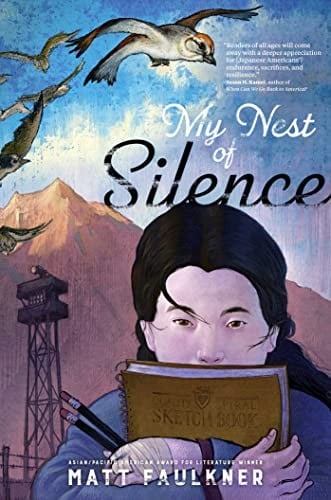
This 'magnificent, essential' middle grade novel offers a poignant and historically significant look at the Japanese American experience during World War II. It masterfully blends prose with graphic novel elements to tell the story of Mari, who protests her family's internment with silence, and her older brother Mak, who fights overseas with the 442nd Regimental Combat Team. The narrative explores themes of resilience, identity, family love, and the profound injustices of racism and war, providing both heartbreaking and humorous moments. It's an excellent resource for discussing a difficult period in American history with children aged 8-12.
Four starred reviews! “Evocative prose and illustrations bring to life…[the] heart-wrenching decisions and considerations that Japanese Americans had to face…[and] their endurance, sacrifices, and resilience.” —Susan H. Kamei, author of When Can We Go Back to America? Told in a brilliant blend of prose and graphic novel, this “magnificent, essential” (Booklist, starred review) middle grade story about a Japanese American family during World War II is written and illustrated by Asian/Pacific American Award for Literature winner Matt Faulkner. Manzanar is nothing like home. Yet the relocation center is where Mari and her family have to live, now that the government has decided that Japanese Americans aren’t American enough. Determined to prove them wrong, Mari’s brother Mak has joined the army and is heading off to war. In protest, Mari has stopped talking for the duration of the war. Or at least until Mak comes home safe. Still, Mari has no trouble expressing herself through her drawings. Mak, too, expresses himself in his letters home, first from training camp and later from the front lines of World War II, where he is fighting with the 442nd Regimental Combat Team. But while his letters are reassuring, reality is not: Mak is facing danger at every turn, from racism within the army to violence on the battlefield. In turns humorous and heartbreaking, Mari and Mak’s story will stick with readers long after the last page.
Discussion Prompts
1
Why do you think Mari chose to stop talking? What other ways could she have expressed her feelings?
2
Mak joins the army to prove his family's loyalty. What does 'loyalty' mean to you, and do you think his actions achieved his goal?
3
The book shows how people faced racism during WWII. How do you think we can stand up against unfair treatment today?
4
How does the blend of prose and graphic novel panels change your reading experience? What did you learn from both parts of the story?
5
What does 'resilience' mean, and how do Mari and Mak demonstrate it throughout the story?
External Reviews
If Your Family Enjoyed This
Reviews
No reviews yet — be the first to share how this book landed with your family.