About This Book
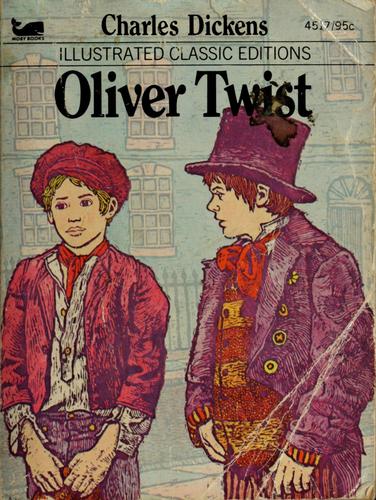
Charles Dickens's classic "Oliver Twist" tells the poignant story of an orphan boy's journey through the brutal realities of 19th-century England. After enduring a harsh workhouse, Oliver escapes to London, where he is ensnared by the infamous Fagin and his gang of child pickpockets, including the Artful Dodger and the menacing Bill Sikes. The novel unromantically portrays the sordid lives of criminals and exposes the cruel treatment of the poor and orphaned, while Oliver's inherent goodness helps him find kindness and eventually uncover his true parentage. This Scholastic edition is adapted for young readers, offering a powerful look at social injustice, resilience, and the enduring search for family and belonging.
Oliver Twist; or, The Parish Boy's Progress, is the second novel by English author Charles Dickens. It was originally published as a serial from 1837 to 1839, and as a three-volume book in 1838. The story follows the titular orphan, who, after being raised in a workhouse, escapes to London, where he meets a gang of juvenile pickpockets led by the elderly criminal Fagin, discovers the secrets of his parentage, and reconnects with his remaining family. Oliver Twist unromantically portrays the sordid lives of criminals, and exposes the cruel treatment of the many orphans in London in the mid-19th century.[2] The alternative title, The Parish Boy's Progress, alludes to Bunyan's The Pilgrim's Progress, as well as the 18th-century caricature series by painter William Hogarth, A Rake's Progress and A Harlot's Progress. In an early example of the social novel, Dickens satirises child labour, domestic violence, the recruitment of children as criminals, and the presence of street children. The novel may have been inspired by the story of Robert Blincoe, an orphan whose account of working as a child labourer in a cotton mill was widely read in the 1830s. It is likely that Dickens's own experiences as a youth contributed as well, considering he spent two years of his life in the workhouse at the age of 12 and subsequently, missed out on some of his education.
Discussion Prompts
1
How does Oliver's kindness help him, even when he's surrounded by bad people?
2
What do you think about the way children were treated in workhouses and by criminals like Fagin?
3
How do characters like Mr. Brownlow and Rose Maylie show empathy and kindness in a harsh world?
4
What does Oliver's journey teach us about never giving up, even when things are very difficult?
5
How does the book show the difference between good and evil, and how do some characters change their minds about what's right?
External Reviews
If Your Family Enjoyed This

Reviews
No reviews yet — be the first to share how this book landed with your family.