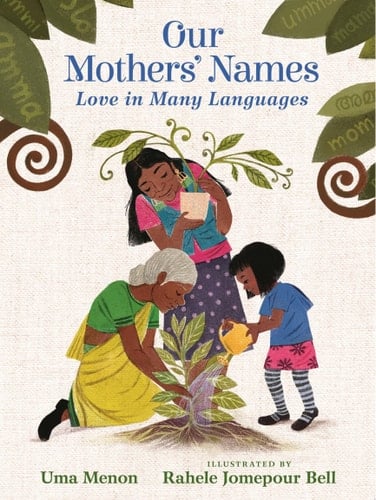
About This Book
From the creators of "My Mother's Tongues," this picture book follows a bilingual Indian-American child who uses "Amma" for her mother. Through interactions with friends from Mexican, Greek, Brazilian, and Arabic backgrounds, she learns about "Mamá," "Mana," "Mãe," and "Umma," and many other ways to express love for mothers. It's a beautiful exploration of linguistic diversity, cultural heritage, and the universal bond of maternal love, perfect for sparking conversations about family and global connections.
How many ways are there to say mother? A bilingual child investigates in this joyful picture-book exploration from the creators of My Mother’s Tongues. “Thank you, Amma,” says the child as her mother praises a birdhouse she’s making with her friend Angelina. With two languages spoken at home, English and Malayalam (the most common language in Kerala, India, where her parents and grandparents were born), Amma is a word the child uses for her Indian-American mom. But Angelina, whose family is from Mexico City, says that her mother is called Mamá. And there are so many other names for mother! Thea’s mother is Greek and known as Mana. Francisco’s family is from Brazil, where moms answer to Mãe. Aliya is fluent in Arabic, whose word for mother is Umma. . . . With just a peek at the many ways to say mother among the world’s thousands of languages, the author and illustrator behind My Mother’s Tongues have fashioned another love letter to family bonds and heritage, another salute to multilingualism for a world that grows smaller and more connected day by day.
Discussion Prompts
1
What do you call your mother or a special caregiver in your family?
2
Do you know any words for 'mother' in other languages? How did you learn them?
3
How do different languages make our world interesting and diverse?
4
What makes your family special, and what traditions do you share?
5
How does it feel to learn about how other families express love for their mothers?
External Reviews
If Your Family Enjoyed This
Reviews
No reviews yet — be the first to share how this book landed with your family.