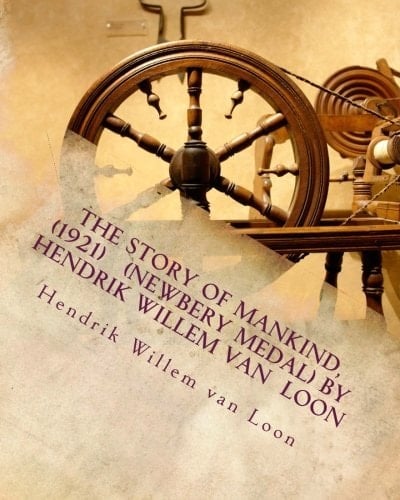
About This Book
Originally published in 1921 and a recipient of the inaugural Newbery Medal, 'The Story of Mankind' is a foundational work of children's nonfiction. Hendrik van Loon masterfully condenses the sprawling history of the human race, from its earliest beginnings around 500,000 BC up to the early 20th century. Written for his own sons, the book adopts an engaging, informal style, making complex historical concepts accessible and memorable for young people. It covers a broad spectrum, including anthropology, cultural developments, societal structures, and key historical events, all designed to spark curiosity and encourage deeper exploration into the past.
A book that won the Newberry Prize in 1921 for an Outstanding Contribution in Children's Literature, The Story of Mankind, by Hendrik van Loon is indeed a classic that has been enjoyed by generations of children and adults. The book is an engagingly written work, dedicated to the author Hendrik van Loon's two young son's Hansje and Willem. It was created to convey the history of the human race to young people in a way that was interesting, memorable and would spur them onto further research and reading into the subject. Tracing the origins of mankind from about 500,000 BC into the present era, The Story of Mankind encompasses anthropology, culture, sociology and history. This book creates a vivid portrayal of the development of the human race from the time of the caveman to the intelligent dominate species that it is today.
Discussion Prompts
1
What do you think is the most important invention or discovery in human history and why?
2
How has the way people live together changed from ancient times to today?
3
If you could ask one historical figure a question, who would it be and what would you ask?
4
What lessons can we learn from the mistakes and triumphs of people in the past?
5
How does understanding history help us understand the world we live in now?
External Reviews
Awards
1 award
If Your Family Enjoyed This
Reviews
No reviews yet — be the first to share how this book landed with your family.