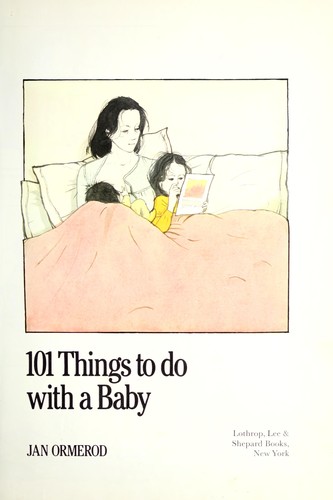
A parent should reach for this book when their child is expecting a new sibling or struggling to connect with a new baby in the family. It beautifully reframes the arrival of a new family member not as a disruption, but as an exciting opportunity for play and love. Through the eyes of a creative six-year-old girl, the book presents a numbered list of 101 things she can do with her baby brother, from the silly (use him as a paperweight) to the sweet (give him a cuddle). For children ages 3 to 7, this story models a positive and empowered role for the older sibling, turning potential jealousy into joyful engagement. It's a wonderful tool for opening conversations about how to be a kind and fun big brother or sister.
The book's central theme is the adjustment to a new sibling. It avoids directly addressing negative feelings like jealousy or resentment. Instead, it offers a purely positive and proactive model for the older sibling. The approach is entirely secular, and the resolution is implicit: the new baby is a wonderful addition who enhances the older sister's life with opportunities for fun and nurturing.
The ideal reader is a child aged 3 to 6 who has recently become or is about to become an older sibling. It's particularly well-suited for a child who feels a bit bored, uncertain, or left out by the new arrival and needs to see the fun possibilities. It empowers the older child by giving them a 'job' and a new playmate.
Your experience helps other parents find the right book.
Sign in to write a reviewNo prep is needed; the book can be read cold. A parent might want to be ready to gently distinguish between the 'pretend' ideas (like using the baby as a paperweight) and the real, safe ways to interact with an infant. This can be part of the fun of the conversation, reinforcing the older sibling's more sophisticated understanding. A parent has just heard their child say something like, "The baby is boring," or "I have nothing to do with him." The parent is witnessing their older child's difficulty in connecting with the newborn and is looking for a book that positively models sibling interaction from the older child's point of view.
A 3-year-old will enjoy the counting, the simple text, and the charming illustrations of the baby. They will absorb the overarching theme of loving a new sibling. An older child, around 5 or 6, will better appreciate the wry humor and the narrator's creative voice. They are more likely to be inspired to create their own list of activities and will identify more strongly with the empowered older sister.
Unlike many new sibling books that focus on validating feelings of jealousy before reaching a positive resolution (like 'Peter's Chair'), this book bypasses the negative feelings altogether. Its unique strength lies in its proactive, positive, and creative framing. The list format is also highly engaging and makes the concept of having a new sibling feel like a fun and manageable project for the older child.
A six-year-old girl narrates a numbered list of 101 simple, humorous, and affectionate activities she can do with her new baby brother. The list format drives the book, with each item accompanied by Jan Ormerod's gentle, observant illustrations that capture the slice-of-life reality of a family with a new baby. The activities range from practical help (getting a bib) to imaginative play (pretending he's a foot-warmer) and moments of pure love (cuddling).
This overview was generated by AI based on the book's content and reviews, and may not capture every nuance.