About This Book
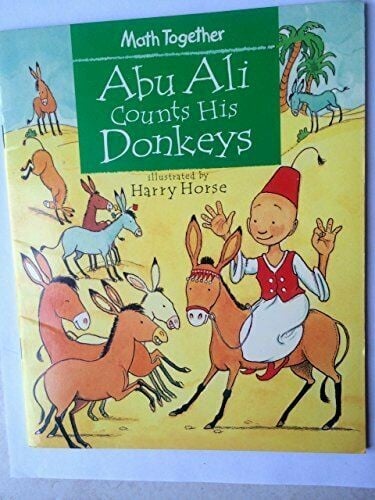
This charming folktale from the Middle East introduces Abu Ali, a man who buys nine donkeys at the fair. On his journey home, he repeatedly miscounts his donkeys, leading to a comical puzzle. His friend Musa eventually helps him discover the simple, yet often overlooked, solution. It's a delightful story that subtly introduces counting and problem-solving skills, wrapped in a gentle, humorous narrative. Perfect for sparking conversations about observation and asking for help.
Abu Ali buys nine donkeys at the fair. But when he stops on the ride home, he can count only eight. Then he counts again, and there are nine. Can his friend Musa solve the mystery?
Wonderlit Review
Abu Ali Counts His Donkeys is a delightful and humorous folktale from the Middle East that centers on the relatable predicament of Abu Ali. After purchasing nine donkeys at the fair, he embarks on his journey home, only to find himself repeatedly miscounting his animals. Each time he counts, he forgets to include the donkey he is riding, leading to a comical cycle of confusion and frustration. His clever friend, Musa, eventually steps in to gently point out the obvious, yet overlooked, solution.
The book handles the topic of making mistakes and problem-solving with a light touch and plenty of humor. It normalizes the idea that even adults can make simple errors and that it's perfectly fine, and often helpful, to ask a friend for assistance. The emotional arc is consistently gentle and uplifting, moving from Abu Ali's mild bewilderment to a satisfying, chuckle-inducing resolution.
This story is ideal for children who are learning basic counting skills, those who enjoy simple mysteries, or anyone who appreciates a good laugh from a relatable human error. It also serves as an excellent introduction to folktales from the Middle East, offering a glimpse into a different cultural context. Parents can reach for this book when their child needs a lighthearted story about observation, perseverance, or the value of friendship. There are no sensitive scenes requiring previewing; it's a straightforward, joyful read. Younger children (ages 4-6) will likely find the repetitive counting and Abu Ali's predicament very funny, while older children (7-8) might quickly solve the 'mystery' and enjoy feeling clever, appreciating the cultural flavor. For the upper end of the suggested age range (9-11), it might be a quick, pleasant read, but perhaps less challenging. What sets this book apart from many counting books is its narrative depth as a traditional folktale, providing cultural enrichment alongside its mathematical lesson, rather than just being a didactic counting exercise.
If Your Family Enjoyed This
Reviews
No reviews yet. Be the first to share how this book landed with your family.