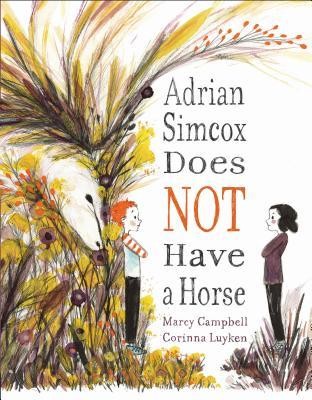
A parent might reach for this book when their child is quick to judge a peer or struggles to understand that people live in different circumstances. In this story, Chloe is convinced her classmate Adrian Simcox is lying about owning a horse. After all, Adrian lives in a tiny house and his shoes have holes in them. Chloe is determined to expose the lie, but her mother gently guides her toward a more compassionate perspective, leading to a quiet, powerful revelation about the nature of truth and the power of imagination. This book is a beautiful, non-preachy tool for starting conversations about empathy, kindness, and socioeconomic differences. It encourages children to look beyond surface appearances and consider the feelings of others. For ages 7 to 10, it's a perfect story to model how to replace judgment with curiosity and understanding.
The book addresses poverty and socioeconomic disparity. The approach is metaphorical and gentle, conveyed through visual details (a small house, worn shoes, a sparse yard) rather than explicit labels. The narrative avoids pity, instead focusing on the dignity and rich inner life of the child experiencing poverty. The resolution is hopeful and focuses on the growth of the protagonist's empathy, ending on a note of potential friendship.
Your experience helps other parents find the right book.
Sign in to write a reviewThis is for an early elementary school child, ages 7-9, who is starting to notice and comment on social and material differences among their peers. It is particularly well-suited for a child who is a literal thinker, who struggles with gray areas, and who might be quick to label others as 'liars' or 'weird' without considering their perspective.
Parents should be prepared for a conversation about why some people have more money than others, and the difference between a lie and a story someone tells to bring themselves joy. Preview the illustrations of Adrian's home and the final reveal to gauge your child's potential reaction. The book can be read cold, but the follow-up conversation is key. A parent has just overheard their child say something judgmental about a classmate's belongings, home, or family situation. For example: "He can't have a new video game, his parents don't even have a nice car." or "She's lying about her vacation, her clothes are old."
A younger child (7) will focus on the central conflict: Is Adrian lying or not? They will take away a clear lesson about kindness and not calling people out. An older child (9-10) can better grasp the nuanced themes of poverty, imagination as a comfort, and the idea that truth can be emotional, not just factual. They may connect more deeply with Chloe's internal struggle and her eventual change of heart.
Unlike many books on poverty that center on charity or pity, this story focuses entirely on a shift in perspective. Its core message is not about 'helping' the poor, but about respecting another person's reality and inner world. The gorgeous, gentle illustrations by Corinna Luyken perfectly match the story's tone, elevating a simple narrative into a profound emotional experience.
The narrator, Chloe, is skeptical of her classmate Adrian Simcox, who insists he owns a horse. Observing his small house and worn clothing, Chloe becomes fixated on proving he is a liar. She complains to her mother, who listens patiently before driving her to Adrian's neighborhood. There, Chloe peeks over the fence and discovers the truth: Adrian's 'horse' is an imaginary friend he cares for in a field behind his house. This realization shifts Chloe's perspective from judgment to empathy, and she acknowledges the beauty in Adrian's reality.
This overview was generated by AI based on the book's content and reviews, and may not capture every nuance.