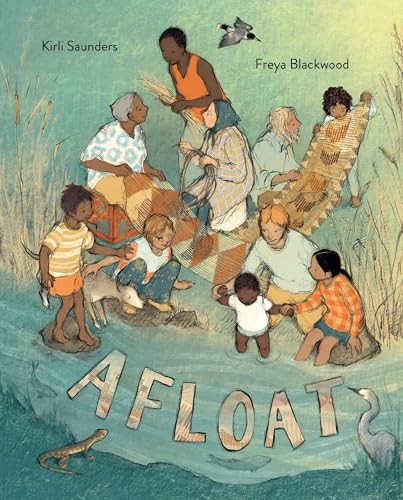
A parent might reach for this book when their child is navigating a big life change, like a move or starting a new school, and expressing feelings of loneliness or uncertainty. Afloat is a gentle, lyrical story that uses the metaphor of an ocean journey to explore the complex emotions of feeling adrift. As the protagonist travels, they learn from the natural world how to be resilient, find their own inner strength, and discover that connection can be found in unexpected places. For children ages 6 to 8, this book provides a beautiful and reassuring way to talk about difficult feelings. It's an excellent choice for parents who want to open a conversation about resilience and self-confidence through a comforting, nature-based story rather than direct instruction.
Metaphorical challenges on the ocean, like waves or feeling lost. Not overly scary.
Sensitive Topics
The book addresses themes of loneliness, anxiety, and finding one's identity through a sustained metaphor of being lost at sea. The approach is gentle and allegorical, not direct. It avoids any specific real-world trauma, focusing instead on the universal feeling of being unmoored. The resolution is entirely hopeful and empowering, reinforcing the idea of internal resilience. The narrative is secular.
Ideal Reader
A sensitive, introspective 6 to 8-year-old who is feeling overwhelmed by a transition (new school, new home, change in family dynamics). It is perfect for a child who connects with nature and responds well to metaphorical storytelling to process their emotions.
Parent Prep
No advance preparation is needed. The book can be read cold. Its gentle, metaphorical nature makes it a very safe entry point for discussion. A parent should be prepared to help their child connect the story to their own life with gentle questions after the reading. A parent overhears their child say, "I feel all alone," "I miss my old friends," or notices the child has become more withdrawn or anxious following a significant change in their routine or environment.
Age Experience
A younger reader (age 6) will connect with the surface-level adventure, the beautiful ocean imagery, and the simple narrative of a journey. An older reader (age 8) will be more capable of grasping the deeper metaphor, relating the feeling of being 'afloat' to their own emotional experiences and understanding the lessons of resilience more abstractly.
What Makes It Special
Unlike many social-emotional books that provide explicit instructions or social scripts, Afloat's power lies in its poetic lyricism and its trust in the reader. It uses the natural world as a gentle teacher, allowing a child to internalize lessons on resilience and belonging organically. The author's identity as a First Nations woman also brings a unique and profound perspective on connection to the environment (or 'Country').
Read plot summary
The story follows a protagonist who feels lost and disconnected, metaphorically set adrift on the ocean. Through encounters with various marine animals and natural phenomena (currents, stars, weather), the character learns lessons about strength, perseverance, and the nature of belonging. The journey is one of internal discovery, culminating in the protagonist finding a sense of peace, self-confidence, and their own place in the world.
This overview was generated by AI based on the book's content and reviews, and may not capture every nuance.
Discussion Prompts
1
The main character starts out feeling adrift. Can you remember a time you felt a little lost or unsure, maybe on the first day of school? What did it feel like?
2
Think about the different sea creatures or parts of nature the character meets. Which one do you think was the most helpful teacher, and what lesson did it teach about being strong?
3
At the end of the journey, the character finds a new sense of belonging. What does 'belonging' mean to you? Is it a place, a feeling, or the people you're with?
4
If you could give one piece of advice to the character at the beginning of the book, what would you say?