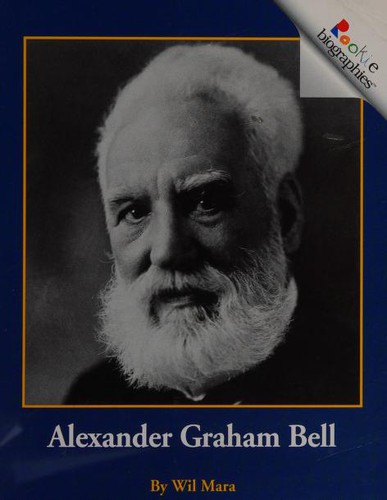
A parent might reach for this book when their child asks how the phone was invented or shows a general curiosity about how everyday things work. This simple biography introduces young readers to Alexander Graham Bell, a man whose fascination with sound was deeply personal, as both his mother and wife were deaf. The book follows his journey of tireless experimentation that led to the invention of the telephone. It highlights themes of perseverance, curiosity, and the power of imagination. Perfectly suited for early elementary readers, its straightforward text and illustrations make the history of a world-changing invention accessible and inspiring.
The book deals directly with the topic of disability (deafness). Bell's mother and wife are identified as deaf. This is presented factually and serves as the primary motivation for his work. The approach is entirely secular and frames his connection to the deaf community as a positive and integral part of his story. The resolution is hopeful, focusing on the triumph of his invention.
Your experience helps other parents find the right book.
Sign in to write a reviewThe ideal reader is a 6 to 8-year-old who has started asking 'how' and 'why' about technology. This child might enjoy building with blocks, learning how things work, or hearing stories about real people who changed the world. It’s an excellent fit for a child needing a simple, concrete example of how persistence can lead to amazing results.
No preparation is needed. The book is self-contained and very clear. A parent could enhance the reading by preparing to discuss how much phones have changed from Bell's time to today's smartphones, helping to connect the historical context to the child's own life. A parent has just heard their child ask, "Who invented the phone?" or has observed them trying to figure out how a gadget works. The parent is looking for a book to channel that natural curiosity into a learning opportunity about history, science, and perseverance.
A 6-year-old will grasp the core story: a man was curious about sound and invented the telephone. They will appreciate the clear narrative sequence. An 8-year-old will understand the more nuanced themes, such as how Bell's personal relationships with deaf family members motivated his scientific pursuits and the importance of resilience in the face of challenges.
Among many biographies of inventors, this book's key differentiator is its accessibility for the youngest independent readers. At just 24 pages, with a controlled vocabulary and supportive illustrations, it provides a non-intimidating entry point into the biography and STEM genres. It uniquely centers Bell's personal connection to the deaf community as the emotional core of his motivation.
This book is a simplified biography of Alexander Graham Bell for early readers. It covers his childhood in Scotland, his family's expertise in speech, and how his mother's and later his wife's deafness sparked his lifelong interest in sound and hearing. The narrative focuses on his work as a teacher for the deaf and his dedicated, often frustrating, experiments with his assistant, Thomas Watson. The story culminates in the successful invention of the telephone and the first-ever phone call.
This overview was generated by AI based on the book's content and reviews, and may not capture every nuance.