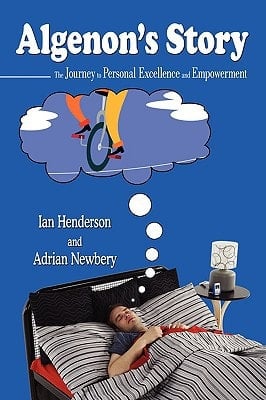
Algenon is plagued by a recurring, surreal dream featuring bizarre elements like Aristotle on a unicycle. This dream becomes a focal point for his introspection, leading him to a series of personal epiphanies about his life, identity, and place in the world. These insights propel him on a journey of self-discovery and empowerment, culminating in personal fulfillment. The book handles abstract concepts like "personal excellence," "spiritual journey," and "empowerment" through the metaphorical lens of Algenon's dream and subsequent reflections. It presents these serious subjects in a "lighthearted" way, making them accessible. It's secular in its approach to "spiritual journey," focusing on personal growth rather than religious doctrine. The arc moves from a state of mild obsession or confusion with the dream to profound understanding and ultimately, joy and fulfillment. It's an uplifting and hopeful journey, designed to inspire. This book is for children, likely upper elementary to middle school (ages 9-14), who are beginning to ask bigger questions about their identity, purpose, and how to navigate their own feelings and aspirations. It's particularly suited for thoughtful, introspective children who enjoy fables or allegories. A parent might reach for this when their child is expressing feelings of being lost, unsure of their path, or seeking motivation for personal growth. It could be used to encourage self-reflection, goal-setting, or to discuss the idea of finding meaning in everyday experiences. Parents should be prepared to discuss abstract concepts like "epiphany," "personal excellence," and "spiritual journey" in child-friendly terms. The book's language, while presented as lighthearted, can be quite philosophical. It's a good springboard for conversations about dreams, goals, and self-improvement. Younger children (7-8) might enjoy the whimsical dream elements but struggle with the abstract concepts of self-empowerment. Older elementary (9-11) might grasp the core message of self-improvement and finding purpose. Middle schoolers (12-14) could engage more deeply with the philosophical aspects and apply the "techniques" to their own lives. Unlike many children's books that address specific social-emotional skills, "Algenon's Story" takes a broader, more philosophical approach to personal development. It uses a surreal, fable-like narrative to explore internal growth, rather than external challenges, making it unique in its focus on introspection and abstract life lessons.