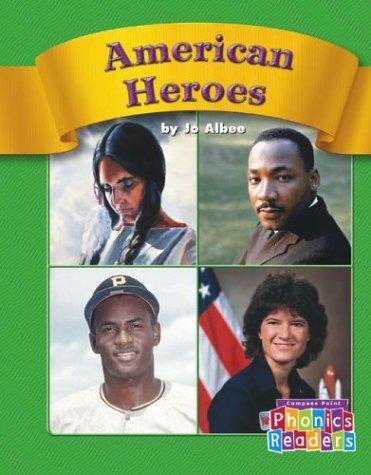
A parent might reach for this book when their early reader is curious about real-life "superheroes" and ready for their first taste of nonfiction. "American Heroes" introduces foundational figures like George Washington, Harriet Tubman, and Sally Ride using simple, decodable text designed to build reading confidence. It frames historical achievement through the lens of bravery and perseverance, making big concepts accessible for young minds. This book is an excellent choice because it cleverly merges phonics practice with history education. It provides positive, real-world role models and can serve as a gentle starting point for conversations about leadership, courage, and what it means to make a difference. For a child transitioning to independent reading, it makes the hard work of sounding out words feel important and rewarding.
The book touches upon complex historical topics like the Revolutionary War, the Civil War, and the Civil Rights Movement in an extremely simplified, age-appropriate manner. Slavery and racial discrimination are alluded to through the inclusion of Harriet Tubman and Martin Luther King Jr., but the descriptions are brief and focus on their positive actions (e.g., helping people be free) rather than the harsh realities of the injustice they fought. The approach is secular and simplified to the point of being abstract.
Your experience helps other parents find the right book.
Sign in to write a reviewA 6-year-old who is proud of their new reading skills and loves stories about "good guys" or superheroes. This child is ready for nonfiction but needs a very simple, accessible format. Also suitable for a child who has shown interest in historical figures after seeing them on a coin or a holiday poster.
No prep is needed to read the book cold. However, parents should be prepared for follow-up questions. The book's simplicity (e.g., "Harriet Tubman helped people be free") will likely require parents to provide more context about slavery, the Underground Railroad, or the Civil Rights Movement if the child becomes curious. A parent might look for this book after their child asks, "Who was George Washington?" or "What's a real hero?" or expresses a desire to read a "real" book about "important stuff" on their own. It also serves parents looking for phonics practice books that are not just silly fiction.
A 5-year-old will likely focus on the phonics and the most basic concepts: this person was a president, this person flew in space. They will see them as characters. A 7 or 8-year-old might begin to grasp the historical significance and use the book as a springboard for more complex questions, connecting the figures to concepts they are learning in school, like fairness and leadership.
Its primary differentiator is the explicit integration of phonics instruction into a nonfiction biographical format for the earliest readers. While many early readers introduce historical figures, this one is specifically designed as a tool for literacy acquisition, making the content serve the skill-building, not the other way around. It is a functional, educational tool disguised as a simple history book.
This early reader provides brief, one-to-two sentence profiles of notable Americans, including George Washington, Abraham Lincoln, Harriet Tubman, Martin Luther King Jr., and Sally Ride. The text is phonics-based, focusing on simple sentence structures and decodable words to support emergent readers. It connects each figure to a key heroic quality or achievement, such as leadership, bravery, or exploration.
This overview was generated by AI based on the book's content and reviews, and may not capture every nuance.
