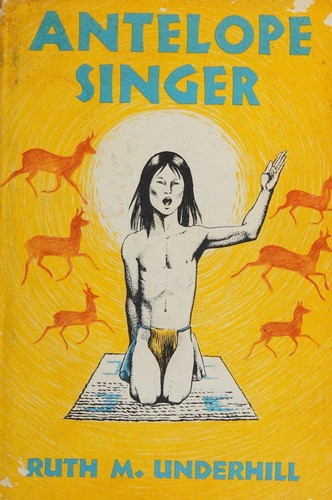
A parent might reach for this book when their child feels like they don't fit in or aren't good at the same things as their friends. Set in the Sonoran desert long ago, Antelope Singer follows Hunt, a young Papago boy who feels clumsy and out of place because he isn't a natural hunter. Raised by his grandmother, he struggles to find his path until a wise elder teaches him the traditional songs and stories of his people. Through this mentorship, Hunt discovers his own unique gift for storytelling and his true place within his community. This quiet, thoughtful book is perfect for contemplative children, exploring themes of belonging, self-confidence, and the idea that everyone has a valuable and unique contribution to make, even if it's not what's expected.
Your experience helps other parents find the right book.
Sign in to write a reviewThe protagonist's status as an orphan is a core part of his identity and loneliness, but the deaths of his parents are not a plot event. The book's spiritual content is rooted in the specific cosmology of the Tohono O'odham people, presented as their cultural reality. The resolution is deeply hopeful, as the protagonist finds a strong sense of belonging and purpose that he previously lacked.
A thoughtful child, 9-11, who may feel they don't excel at conventional activities like sports. This book is for the child who is more of an observer, a listener, or an artist, and needs to see those qualities celebrated as strengths. Also ideal for a child curious about history and different cultures.
Parents should provide context. The book was written in 1961 by a non-Native anthropologist. It uses the term "Papago," which is now outdated; the people are the Tohono O'odham. It's a great opportunity to discuss the importance of "own voices" authors and how our understanding of respectful representation has evolved. The content itself is gentle and requires no other specific preparation. The parent hears their child say, "I'm bad at everything," or expresses frustration that they can't keep up with their peers in a specific, highly-visible activity. The child is equating their self-worth with a very narrow skill set.
A younger reader (8-9) will connect with the story of a boy finding his special talent and his friendship with an elder. An older reader (10-12) will better appreciate the deeper themes: cultural preservation, non-traditional forms of masculinity, and the role of the artist and historian within a society.
Unlike many historical adventures for this age, the protagonist's triumph is not through physical prowess but through intellectual and artistic skill. It uniquely champions the power of storytelling and cultural memory as a form of strength and community contribution, offering a valuable model for children whose talents are not based in physical competition.
Hunt is an orphaned Papago (Tohono O'odham) boy who feels like an outsider because he lacks the traditional skills of a hunter. He is mentored by a wise old man, the "Antelope Singer," who teaches him the sacred songs and stories of their people. Through this relationship, Hunt finds his confidence and his unique, vital role in the community is not as a provider of food, but as a keeper of culture and history.
This overview was generated by AI based on the book's content and reviews, and may not capture every nuance.