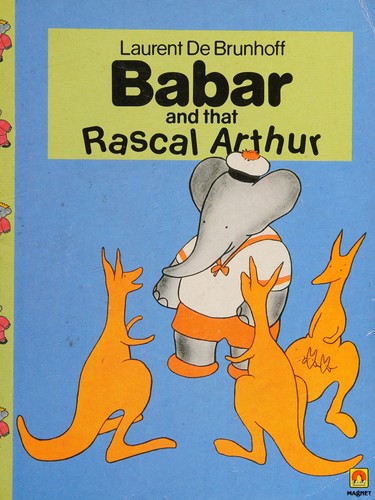
Parents navigating the delightful chaos of a child's first real friendships, complete with playful mischief and minor disagreements, will find a gentle guide in this classic Babar story. The book follows Babar's young cousin, Arthur, whose prankish and impulsive nature creates a bit of trouble in the peaceful kingdom of Celesteville. Through Arthur's antics and Babar's patient guidance, the story explores the nuances of friendship, the importance of considering others' feelings, and the power of forgiveness. For ages 3 to 7, this book is a wonderful, non-preachy way to open a conversation about how to be a fun friend while also being a kind one, showing that mistakes can be forgiven and even a 'rascal' has heroic qualities.
The book deals with childhood misbehavior and its consequences. The approach is gentle and metaphorical, framing pranks as thoughtless rather than malicious. The resolution is hopeful, emphasizing redemption through a positive act. There is a brief scene of mild peril with crocodiles, but it is not graphic and is resolved quickly and positively.
Your experience helps other parents find the right book.
Sign in to write a reviewA 4- to 6-year-old who is testing social boundaries with friends or siblings. This could be a child who is often told they are being 'too silly' or a child who is frequently annoyed by a more boisterous friend. It's for the child who just had a playdate end in a small squabble over a prank that wasn't well-received.
The book can be read cold. A parent might want to be prepared to discuss the scene where Arthur ties a knot in Lady Rataxes's tail. It's an opportunity to ask, 'Do you think she liked that game?' to introduce the idea of perspective. The crocodile scene is brief and not frightening for most children in this age range. The parent has recently mediated a conflict between friends or siblings where one child's 'fun' was perceived as 'mean' by the other. The parent might be looking for a way to talk about empathy and the impact of our 'jokes' on others without being overly stern.
A 3-year-old will enjoy the charming illustrations and the simple, cause-and-effect action of the pranks. A 5-year-old will begin to grasp the social-emotional story: Arthur's actions make others unhappy, and his later bravery makes them happy again. A 7-year-old can appreciate the nuance that the same quality (Arthur's mischievous cleverness) can be both a problem and a solution depending on the context.
Unlike many books on misbehavior that focus on punishment and apology, this story's resolution hinges on redemption through action. Arthur doesn't just say sorry; his innate 'rascal' nature is what saves the day. This provides a unique and validating message that high energy and cleverness are not inherently bad traits, they just need to be channeled constructively. The classic de Brunhoff art style also offers a different, more detailed visual experience than many contemporary books.
King Babar's spirited young cousin, Arthur, visits Celesteville and engages in a series of pranks, such as tying a knot in Lady Rataxes's tail. Babar is frustrated by Arthur's thoughtless behavior but struggles with how to manage him. The conflict resolves when Arthur, Babar, and the other children are exploring a cave and are chased by crocodiles. Arthur's quick thinking and mischievous nature allow him to create a diversion with his sailor suit, leading everyone to safety. His bravery earns him forgiveness and the admiration of the others, teaching a gentle lesson about channeling one's energy for good.
This overview was generated by AI based on the book's content and reviews, and may not capture every nuance.