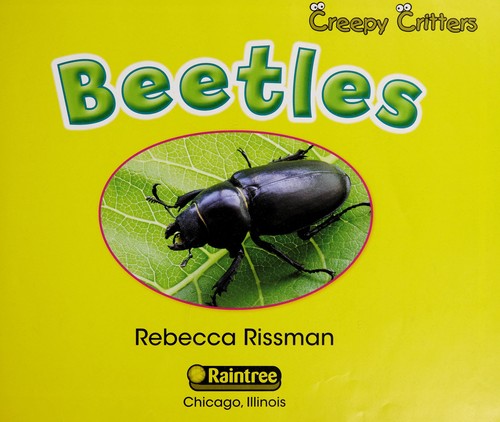
A parent might reach for this book when their child starts pointing out bugs in the backyard or asking endless 'why' questions about the tiny creatures they find. 'Beetles' is a fantastic first dive into the world of entomology, designed specifically for early elementary readers. The book uses clear, simple language and large, detailed photographs to explain what makes a beetle a beetle, exploring their body parts, diverse habitats, and fascinating life cycles. It nurtures a sense of wonder and encourages scientific observation, making the natural world feel accessible and exciting. This is an ideal choice for fostering a love of science and turning simple curiosity into a real learning opportunity.
The book touches on natural predator and prey relationships in a very direct, scientific manner (e.g., ladybugs eat aphids). This is presented as a fact of nature and is not emotionally charged.
The ideal reader is a 6 to 8-year-old who is a concrete thinker and loves collecting facts. This child spends time outdoors exploring, is fascinated by small creatures, and may prefer non-fiction books that provide clear, tangible information over complex narratives.
Your experience helps other parents find the right book.
Sign in to write a reviewNo preparation is needed. The book is straightforward and can be read cold. Parents might want to have a magnifying glass or a bug jar handy, as the book will likely inspire an immediate desire to go on a beetle hunt in the backyard. A parent might seek this book after their child finds a beetle and is either fascinated or frightened. The child might ask, "What is this bug?" or "Is it dangerous?" The parent wants a simple, reassuring, and educational resource to channel that moment into a learning opportunity.
A 6-year-old will primarily be captivated by the large, vibrant photographs and will grasp the core ideas, like "ladybugs are beetles." They may need help with new vocabulary. An 8 or 9-year-old can read it independently, understand the life cycle concept more deeply, and use the glossary and text features to build their scientific vocabulary, taking away a more detailed understanding of classification and biology.
Among the many books about insects, this one's strength lies in its focused simplicity and accessible design for the earliest independent readers. Unlike denser encyclopedic volumes, its clean layout, strong photo-to-text connection, and limited text per page make it a perfect, unintimidating entry point into a specific scientific subject.
This non-fiction book introduces young readers to the world of beetles. It begins by defining what a beetle is and uses a clear, labeled diagram to identify its main body parts (head, thorax, abdomen, elytra). The text then explains the four-stage life cycle of a beetle: egg, larva, pupa, and adult, with photographs for each stage. The book highlights the vast diversity within the beetle family, showcasing examples like ladybugs, fireflies, and rhinoceros beetles, and describes the various habitats they occupy, from forests to ponds. It concludes with a picture glossary to reinforce key vocabulary.
This overview was generated by AI based on the book's content and reviews, and may not capture every nuance.