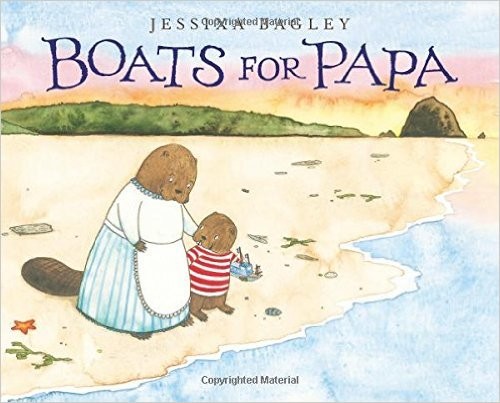
A parent might reach for this book when their child is deeply missing a loved one who is far away. Buckley the beaver's papa is gone, and he misses him terribly. To feel close to him, Buckley builds beautiful little boats from things he finds on the beach and sends them out to sea with a wish that they'll reach his papa. When no reply comes, his sadness grows, but his mother's loving support reveals a touching surprise. This poignant story validates feelings of longing and loneliness, while celebrating the power of creativity and enduring family love to bridge any distance. It's a gentle, comforting read for children navigating separation.
The reason for the father's absence is ambiguous. It could be interpreted as work, deployment, separation, or even death, although the ending strongly implies he is alive and will return. The approach is metaphorical and focuses on the child's emotional experience of longing. The resolution is hopeful and affirming, centered on the love of the remaining parent and the preservation of the child's loving gestures. It is a secular story.
Your experience helps other parents find the right book.
Sign in to write a reviewA 4 to 7 year old child experiencing the prolonged absence of a parent (due to military deployment, long-distance work, or separation). They might be feeling lonely, sad, and unsure how to express their big feelings. This book is for the child who needs to see their feelings of longing validated and be reassured of the love that surrounds them.
Parents should be prepared for the ambiguity of Papa's absence. The story doesn't provide a concrete reason, which is a strength but may lead to questions. The page where Buckley cries, saying "He doesn't see them... My boats don't work," is particularly poignant and might be a moment for a hug and reassurance. The final reveal of the mother collecting the boats is the emotional core and a great place to pause and talk. No major prep needed; it can be read cold. The parent notices their child is quieter than usual, drawing pictures of the absent parent, or asking repeatedly, "When is Daddy/Mommy coming home?" The child might be acting out or seeming sad without being able to articulate why they feel so lonely.
A 4-year-old will connect with the simple act of making something for a loved one and the basic feeling of missing someone. They will be comforted by the mother's love. A 7 or 8-year-old will grasp the deeper metaphor: that expressing love is valuable in itself, even if it doesn't get an immediate response, and that love is shown in many ways (both in sending the boats and in saving them).
Unlike many books about parental absence that focus on the reunion, this book focuses entirely on the waiting period. Its unique strength lies in validating the child's coping mechanism (creative expression) and centering the steadfast love of the present parent. The reveal that the mother has been cherishing these "messages" is a powerful and unique twist that emphasizes that the child's feelings are seen and valued by the family they are with.
A young beaver named Buckley misses his Papa, who is away. He channels his feelings into making intricate boats from driftwood and beach treasures, sending them out on the water as messages. When he receives no reply, his hope wanes, but his Mama provides comfort and reveals that she has been collecting his boats all along, keeping them safe as a testament to his love.
This overview was generated by AI based on the book's content and reviews, and may not capture every nuance.
