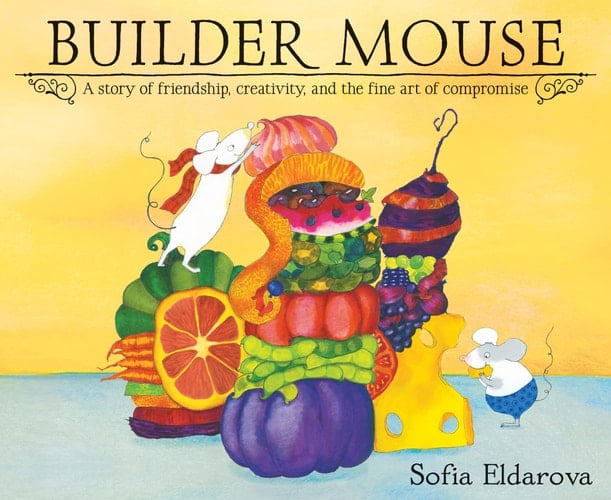
"Builder Mouse" introduces readers to Edgar, an imaginative mouse who channels his artistic talents into constructing elaborate architectural marvels from leftover food. His passion is met with a recurring challenge: his fellow mice, driven by hunger, consistently consume his edible art, leaving Edgar feeling frustrated and disheartened. The book gently explores Edgar's emotional journey as he grapples with this problem, highlighting his initial frustration and subsequent determination to find a resolution. The narrative handles the sensitive topic of frustration and conflict in a very accessible way for young children. It's not about malice, but about differing needs and perspectives. Edgar's journey is one of creative problem-solving and compromise, leading to a solution that respects both his artistic drive and the community's need for food. The emotional arc starts with a relatable feeling of disappointment and moves towards a hopeful and triumphant resolution, emphasizing the power of ingenuity and collaboration. This book is specifically for children who might be struggling with sharing, feeling misunderstood in their creative pursuits, or experiencing frustration when their efforts are not appreciated or are disrupted. It's also excellent for fostering discussions about how to find solutions when different needs clash within a group or family. A parent might reach for this book when their child is expressing frustration over a project being ruined, or when trying to teach the concept of compromise in a sibling or peer dynamic. Parents should preview the initial scenes of Edgar's frustration to prepare for discussions about these feelings. The book offers a wonderful opportunity to talk about empathy, asking "How do you think Edgar felt?" and "How do you think the other mice felt?" While the publisher lists a broad age range of 4-11, this 32-page book is best suited as a read-aloud for ages 4-6 and an early independent read for ages 7-8. What sets this book apart is its simple yet profound illustration of how creative thinking can bridge gaps between conflicting desires, offering a positive model for navigating social challenges.