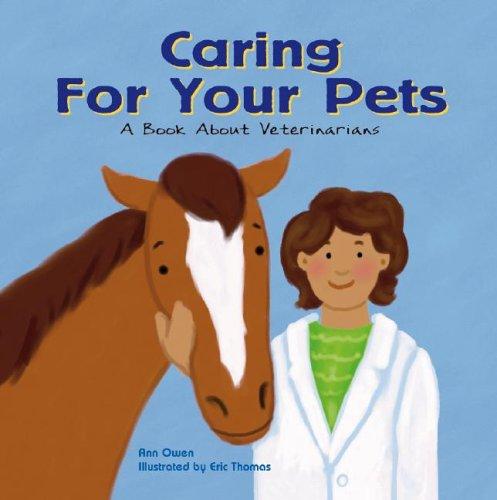
A parent might reach for this book when their child is feeling anxious about an upcoming vet visit or is starting to ask questions about different jobs that help people and animals. This straightforward nonfiction book walks young readers through a typical day for a veterinarian, from routine checkups for a puppy to caring for a sick cat. It gently introduces concepts like examinations, x-rays, and vaccinations, framing the vet as a kind and knowledgeable community helper. The book's focus on empathy for animals and teamwork within the clinic provides a reassuring and educational look into the world of animal care, making it perfect for animal-loving kids in early elementary school.
The book is very gentle and avoids sensitive topics like animal death or euthanasia. Animals are shown as sick or injured, but the context is always about providing care and promoting healing. The resolution for each animal case presented is hopeful and positive. The approach is entirely secular and focuses on the practical and compassionate aspects of veterinary science.
Your experience helps other parents find the right book.
Sign in to write a reviewThis book is ideal for a 6 or 7-year-old who has a new pet and is preparing for their first vet visit. It's also perfect for an animal-loving child who is curious about community helpers and might be expressing an early interest in a career working with animals. It's a great fit for a child who has some anxiety about doctor visits in general, as it frames the experience in a very positive light.
No parent prep is needed. The book is straightforward, gentle, and can be read cold. The text and illustrations are clear and self-explanatory. It’s a great tool to open up a conversation, but it doesn't require any pre-reading or contextualization. The parent has just scheduled the new puppy's first vet appointment and their child is nervous or asking, "Will the shot hurt him?" Another trigger could be the child asking, "What job do I want when I grow up?" and showing an interest in animals.
A younger reader (age 6) will likely focus on the charming illustrations of the animals and grasp the main idea that veterinarians are kind helpers. An older reader (age 8-9) will absorb more of the specific vocabulary (e.g., 'veterinarian,' 'technician,' 'x-ray') and better understand the concept of the clinic as a collaborative workplace and a scientific environment. The older child may also connect it more directly to potential career interests.
Unlike many story-driven books about vet visits, this one is part of a 'Community Workers' series, so its primary focus is informational and procedural. Its 'day in the life' format provides a structured, reassuring overview of the job. The inclusion of an exotic pet (a lizard) alongside the more common cat and dog is a nice touch that broadens the scope of a vet's work for young readers.
This nonfiction early reader follows Dr. Moore, a veterinarian, through her workday. The narrative covers several common scenarios in a vet clinic: a wellness check for a new puppy (including a vaccination), diagnosing and treating a sick cat, and setting the leg of an injured lizard. The book also introduces the role of a veterinary technician and highlights the teamwork required to care for animals. It explains basic equipment like a stethoscope and an x-ray machine in simple, accessible terms.
This overview was generated by AI based on the book's content and reviews, and may not capture every nuance.
