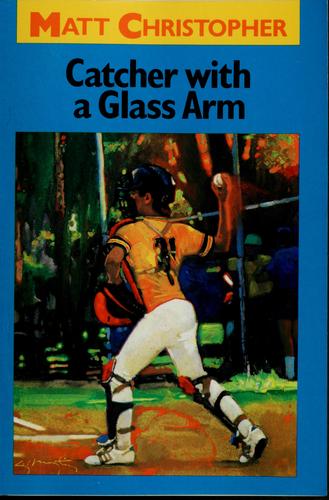
A parent might reach for this book when their child is facing a physical setback or injury that makes them feel like they can no longer succeed at something they love. Catcher with a Glass Arm tells the story of Gil, a former star pitcher whose arm injury forces him into the new, unfamiliar role of catcher. He struggles with frustration and self-doubt, feeling defined by his weakness. The book beautifully illustrates themes of resilience, adapting to change, and discovering that true strength isn't always physical. For children ages 8-12, this classic sports story provides a powerful, relatable model for overcoming adversity and finding a new way to contribute and be a leader.
The book deals directly with physical injury and the resulting limitations. The approach is secular and realistic within a sports context. It is not a permanent disability, but a significant physical challenge that forces the protagonist to redefine his identity. The resolution is hopeful and focuses on the power of adaptation and finding new strengths, rather than a miraculous physical recovery.
Your experience helps other parents find the right book.
Sign in to write a reviewThis book is perfect for a sports-loving child aged 8 to 11 who is dealing with the frustration of a physical limitation. This could be a sports injury, a new diagnosis like asthma, or simply the realization that they are not the star player they once were. They are feeling defined by what they can no longer do.
No specific preparation is needed. The book's themes and language are straightforward and accessible. It can be read cold. A parent could be prepared to discuss times they've had to change their own plans or find new ways of doing things after a setback. A parent has just heard their child say, 'I'm not good at this anymore,' or 'I can't do it because of my arm/leg/breathing.' They see their child wanting to quit an activity they once loved because of a new physical challenge or self-perceived weakness.
A younger reader (8-9) will primarily connect with the baseball action and the clear problem-and-solution plot. An older reader (10-12) will be more attuned to the deeper themes of identity, the psychology of being a leader, and the idea that intelligence can be a more powerful tool than physical strength.
Unlike many sports stories that focus on a triumphant physical comeback, this book's unique strength is its focus on adaptation. Gil doesn't just 'get better.' He gets different. He finds a new way to be essential. This provides a more realistic and arguably more valuable lesson for children facing real-world limitations: success is about finding and using the strengths you have.
Gil, a talented young pitcher, suffers an arm injury that leaves him unable to throw with his former speed and power. Demoted to catcher, he feels useless and tries to hide his 'glass arm' from his teammates. He struggles with his new identity and role on the team, but slowly learns to use his deep knowledge of baseball to his advantage. By becoming a smart, strategic catcher who can out-think opponents, Gil discovers a new way to be a valuable leader and helps his team succeed.
This overview was generated by AI based on the book's content and reviews, and may not capture every nuance.