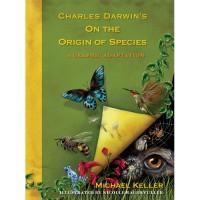
A parent should reach for this book when their child asks big questions about the natural world, like why there are so many different kinds of animals. This beautifully illustrated book adapts Charles Darwin's groundbreaking work to explain the theory of evolution by natural selection for young readers. It follows Darwin’s journey and methodical observations, highlighting themes of immense curiosity and scientific perseverance. It is an ideal choice for a budding naturalist, as it explains a complex topic with clarity, fostering a love for science and history.
Your experience helps other parents find the right book.
Sign in to write a reviewThe core topic of evolution is presented in a direct, secular, and scientific manner. This may conflict with some families' religious beliefs, particularly Creationism. The book also discusses the 'struggle for existence,' competition between species, and extinction. These concepts involve death but are handled clinically and factually, not in a scary or emotionally fraught way. The focus is on the scientific process, not the fate of individual animals.
The ideal reader is a curious 9- to 12-year-old who is fascinated by animals and constantly asking 'why' about the natural world. This child enjoys nature documentaries, learning animal facts, and may have an interest in history or stories of exploration. They are ready to graduate from simple fact books to understanding the larger systems that govern life.
No specific pages need previewing, but parents should be prepared for a potential conversation about how the theory of evolution aligns with or differs from their family's spiritual or religious beliefs. The book can be read cold from a scientific perspective, but the broader context may require parental guidance depending on the family's background. The parent hears their child asking, "How did we get so many different kinds of dogs?" or "Why do birds in our yard look different from birds at the beach?" The trigger is the child's attempt to find a unifying explanation for the diversity of life they see around them.
A younger reader (8-9) will be captivated by the adventure of Darwin's voyage and the beautiful illustrations of diverse animals. They will grasp the basic concept of adaptation. An older reader (10-12) will be able to more fully comprehend the mechanism of natural selection, the vastness of geologic time, and the historical and ongoing importance of Darwin's theory.
Unlike most children's books about evolution, this is a direct, illustrated adaptation of the primary source text. This gives it a unique authenticity and historical depth. The stunning artwork by Sabina Radeva is not just decorative; it is integral to making Darwin's complex prose and powerful ideas clear, vibrant, and accessible to a young audience.
This is an illustrated, abridged adaptation of Charles Darwin's foundational scientific text. The book follows the logic of his argument for evolution by natural selection. It begins with his voyage on the HMS Beagle, his key observations of wildlife (particularly finches in the Galapagos), and his study of domestic breeding. It then clearly explains the concepts of variation, inheritance, and the 'struggle for existence,' culminating in the theory of natural selection and the branching 'tree of life.' The narrative is a mix of biography, travelogue, and scientific explanation.
This overview was generated by AI based on the book's content and reviews, and may not capture every nuance.
