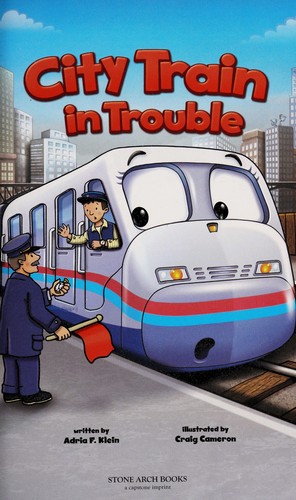
A parent might reach for this book when their vehicle-obsessed child is ready to bridge the gap between picture books and longer chapter books. It provides a perfect confidence-booster for early readers who need a clear, engaging plot to keep them turning pages. The story follows the crew of a city train that mysteriously stops, forcing them to work together to diagnose and solve the problem. Through simple text and a compelling, low-stakes mystery, the book champions themes of teamwork, curiosity, and perseverance. It's an ideal choice for a 6 to 8 year old, celebrating collaborative problem-solving in a familiar and exciting setting.
None. The book focuses entirely on a mechanical, logistical problem. The 'trouble' is non-threatening and presented as a puzzle to be solved. The approach is secular and technical.
Your experience helps other parents find the right book.
Sign in to write a reviewA 6 or 7-year-old who is just gaining reading independence. This child is fascinated by trains, machines, and how things work. They enjoy straightforward stories with a clear problem and a satisfying solution. This is a perfect choice for a reader who is ready for the chapter book format but still needs a simple plot and supportive illustrations.
No specific preparation is needed; the book can be read cold. A parent might choose to talk about the different jobs on a train (engineer, conductor) to provide a little context, but the story is self-explanatory. The vocabulary and concepts are very accessible for the target age range. A parent is looking for a book to help their child transition from easy readers to chapter books. They've noticed their child is captivated by trains and might enjoy a story that validates this interest while building reading stamina and confidence. The child may also be asking more 'how' and 'why' questions about the world around them.
A younger reader (age 6) will likely focus on the big picture: the train is broken, and the workers fix it. They will enjoy the repetition and the satisfying conclusion. An older reader (age 8) may appreciate the procedural aspect more, noticing how the characters use a process of elimination to diagnose the problem. They might take away a more nuanced understanding of teamwork and methodical thinking.
Among countless books about trains, this one stands out for its specific focus on low-stakes, collaborative problem-solving. It's not about a grand adventure or a personified, emotional train. Instead, it's a realistic, procedural mystery that demystifies a common childhood 'what if' scenario. Its simplicity and clear chapter structure make it an excellent and accessible bridge into longer narrative fiction for young, independent readers.
A commuter train unexpectedly breaks down between stations. The engineer and conductor team up to investigate the cause. They go through a checklist of potential issues, ruling them out one by one, until they discover a small, overlooked mechanical part is the culprit. They fix the problem, and the train successfully continues on its journey, much to the relief of the crew and passengers.
This overview was generated by AI based on the book's content and reviews, and may not capture every nuance.
