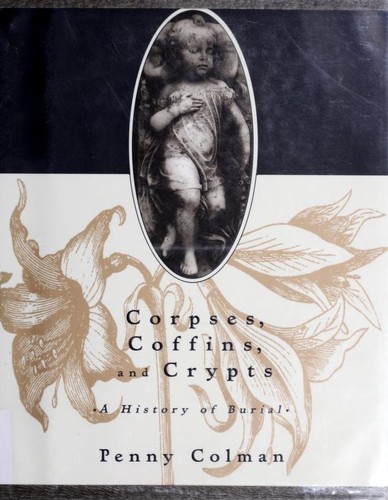
A parent would reach for this book when a child begins asking deep, logistical questions about what happens to a body after death, or when a family is preparing for a funeral and wants to demystify the process. It serves as a grounded, historical, and scientific anchor for children who are curious about the 'how' and 'why' of burial rituals across time and culture. Penny Colman balances the somber nature of the topic with fascinating historical facts and artistic tributes, making the unknown feel manageable rather than frightening. This book is particularly helpful for middle graders who find comfort in facts and logic. It normalizes death as a universal human experience while providing the necessary vocabulary to discuss it openly. By exploring everything from gravestone carvings to famous crypts, the book transforms a taboo subject into an engaging lesson in history, sociology, and science, helping children process grief or curiosity through a lens of objective wonder.
Your experience helps other parents find the right book.
Sign in to write a reviewPhotographs of skulls, mummies, and historical burial sites may be startling to some.
The book deals with death in a very direct, secular, and factual manner. While it acknowledges various religious traditions, its primary approach is historical and scientific. It does not shy away from the physical realities of corpses, but the tone is respectful and objective rather than macabre. The resolution is realistic: death is a natural part of the life cycle.
A 12-year-old with a 'dark' sense of curiosity or a penchant for history who wants to know the truth about what happens after the funeral. It is also perfect for a child who has recently attended a burial and is struggling with the 'hidden' aspects of that experience.
Parents should preview the sections on decomposition and the photographs of actual remains (such as mummies or historical remains) to ensure their child is ready for the visual reality. It is best read with a parent nearby to answer lingering philosophical questions. A child might ask, 'What exactly happens to the body inside the box?' or express a sudden obsession with cemetery iconography.
Younger readers (10-11) will focus on the 'gross' or 'cool' factors of mummies and coffins. Older readers (14-15) will appreciate the sociological aspects and the way different cultures find meaning in loss.
Unlike many books that focus on the emotional side of grief, this book focuses on the material and historical reality, treating the child with enough respect to tell them the truth without sugarcoating.
This is a comprehensive nonfiction exploration of death, burial customs, and the history of how humans handle the deceased. It covers the biological process of decomposition, the evolution of coffins and cemeteries, cultural variations in mourning, and the art found in graveyards. It includes photographs, literary excerpts, and historical anecdotes about famous figures.
This overview was generated by AI based on the book's content and reviews, and may not capture every nuance.