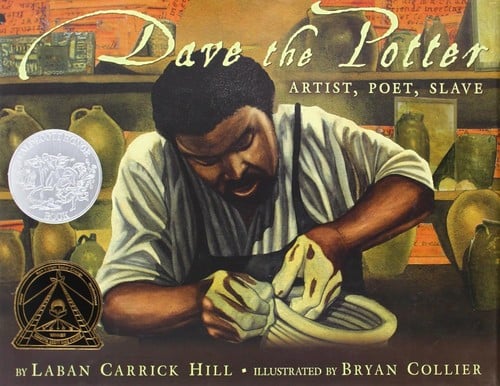
Laban Carrick Hill's 'Dave the Potter: Artist, Poet, Slave' is a remarkable picture book biography that introduces young readers to the extraordinary life of David Drake, an enslaved African American potter and poet in 19th-century South Carolina. The book focuses on Dave's artistic process, showing him transforming humble clay into magnificent, inscribed pots, a powerful act of self-expression and defiance against the dehumanizing conditions of slavery. The narrative, presented in lyrical free verse, is gentle yet profound, allowing children to grasp the historical context without being overwhelmed by graphic details of slavery. Instead, it emphasizes Dave's resilience, creativity, and the enduring power of his spirit.
The book handles the sensitive topic of slavery with nuance, primarily through implication and the visual cues in Bryan Collier's Caldecott-winning illustrations, which subtly depict shackles and other enslaved people in the fields. The emotional arc is one of quiet dignity and triumph; it starts with the harsh reality of Dave's circumstances but culminates in the celebration of his artistic legacy and the lasting impact of his voice. This book is specifically for children aged 4-11 who are beginning to learn about American history, social justice, and the arts. A parent might reach for this book when their child is asking questions about slavery, or when they want to introduce them to inspiring historical figures who overcame immense adversity through creativity.
Parents should be prepared to discuss the concept of slavery and its inherent injustice, as the book provides an excellent springboard for these conversations. While the text itself is not explicit about the brutality, the context is clear. Younger children (4-6) will appreciate the rhythmic text and the visual story of creation, focusing on Dave's hands and the pots. Older children (7-11) will be able to delve deeper into the historical context, the meaning of Dave's poems, and the significance of his self-expression. What sets this book apart from others on similar topics is its unique focus on an enslaved person's artistic contribution and the way it uses art itself as a metaphor for freedom and identity, rather than solely focusing on escape or political struggle.