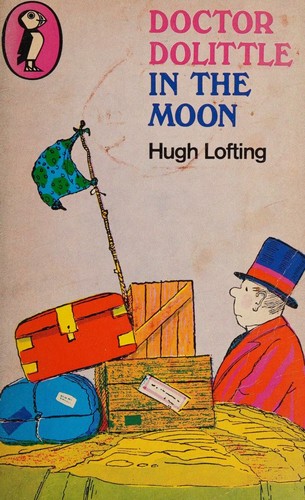
A parent might reach for this book when their child shows a deep fascination with the tiny, often overlooked world of insects and nature. It is perfect for the inquisitive child who asks big questions about small things. In this installment of the classic series, the kind Doctor Dolittle turns his attention from grand voyages to the intricate world within his own garden. He learns the languages of insects, mediates their disputes, and encounters a magnificent giant moth from the moon. The story celebrates curiosity, empathy for all living creatures, and the wonder of scientific discovery. While gentle and imaginative, the book's 1920s origin means parents should be prepared to discuss some outdated perspectives.
The entire Doctor Dolittle series, written in the 1920s, is known for containing racist stereotypes and a colonialist worldview. While this particular volume is less focused on travel and encounters with foreign peoples than others (e.g., The Voyages of Doctor Dolittle), the cultural context is unavoidable. This presents a significant cultural content gap. Any mention of characters like Bumpo or discussions of the wider world are filtered through an outdated, Eurocentric lens that requires significant parental framing and discussion.
Your experience helps other parents find the right book.
Sign in to write a reviewA patient, introspective child, aged 9-11, who loves poring over nature encyclopedias, has a bug-collecting kit, and prefers discovery to conflict. This book is for the budding naturalist or scientist who is more interested in the 'how' and 'why' of the world than in a fast-paced plot. It resonates with children who feel a deep connection to animals and the environment.
This book absolutely requires parental prep. A parent must preview the text for dated language and perspectives. It's crucial to have a conversation with the child about the time period in which the book was written and how our understanding of and respect for different cultures has changed. This is not a book to be handed over without context, especially if the child is familiar with other books in the series that contain more overtly racist passages. A parent overhears their child asking, "Do ants have families?" or sees them spend an entire afternoon gently observing a caterpillar. The child expresses a desire to understand what animals are thinking, demonstrating a budding sense of empathy and scientific curiosity about the natural world.
A younger reader (8-9) will be captivated by the magic of talking to tiny creatures and the sheer fantasy of a moth from the Moon. They will focus on the novelty and the kindness of the Doctor. An older reader (10-12) can better appreciate the blend of naturalism and science fiction, the philosophical implications of interspecies communication, and the gentle humor. They are also more capable of engaging in a nuanced discussion about the book's historical context.
Unlike most animal fantasy books which involve quests or saving a kingdom, this book's adventure is purely intellectual and observational. Its uniqueness lies in how it elevates the microscopic world of a common garden to a place of epic importance and wonder. It champions patience and quiet study as heroic endeavors, making it a powerful, if gentle, ode to the scientific spirit.
After his voyages, Doctor Dolittle settles in his Puddleby garden to focus on a new challenge: learning the languages of insects. He patiently deciphers their communications, becoming an advisor and friend to the garden's insect communities. He helps them organize a grand opera and solves various small-scale problems. The overarching plot involves his encounter with a giant lunar moth named Jam-Jam, who has traveled to Earth and shares stories about the flora and fauna on the Moon, sparking the Doctor's desire for a new adventure into space.
This overview was generated by AI based on the book's content and reviews, and may not capture every nuance.