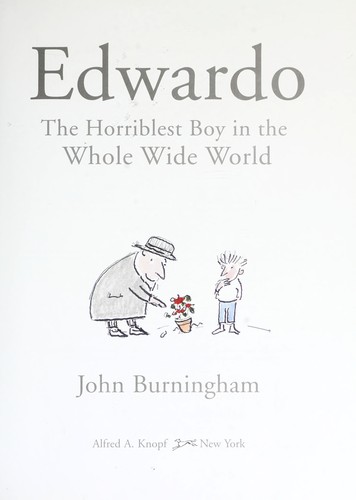
Reach for this book when your child is stuck in a cycle of negative labels or experiencing a 'naughty' phase that feels hard to break. This insightful story follows Edwardo, an ordinary boy who becomes what the adults in his life call him. When he is told he is the horriblest boy, his behavior worsens. However, when a series of accidents are misinterpreted as acts of kindness, the positive reinforcement he receives transforms his identity. It is a powerful lesson in the Pygmalion effect: how our expectations and words directly shape a child's reality. Recommended for children ages 4 to 8, this book serves as a gentle mirror for parents to reflect on their own reactions to a child's mistakes, emphasizing the transformative power of grace and encouragement over criticism.
Your experience helps other parents find the right book.
Sign in to write a reviewThe initial rejection and labeling of Edwardo can feel heavy for sensitive children.
The book deals with verbal labeling and emotional neglect/criticism from adults. The approach is satirical and secular, with a hopeful and redemptive resolution.
An elementary student who feels like they are 'always in trouble' or the 'bad kid' in class, and needs to see that their identity is not fixed by their past mistakes.
Parents should be prepared for the hyperbolic negativity of the adults in the first half of the book. It is best read with a conversational tone to highlight the absurdity of the adults' reactions. A parent who just lost their temper and used a harsh label like 'clumsy' or 'naughty,' and now feels the weight of that interaction.
Younger children (4-5) will take the plot literally and feel relief when Edwardo is finally loved. Older children (7-8) will grasp the irony and the deeper message about how reputations are built.
Unlike many 'behavior' books that focus on a child learning a lesson, Burningham shifts the responsibility to the adults, showing how their perception creates the child's reality.
Edwardo is a typical child who is occasionally messy, loud, or clumsy. Every time he makes a mistake, the adults in his life react with harsh labels, calling him the 'horriblest boy in the whole wide world.' Consequently, Edwardo leans into this identity. The turning point occurs when Edwardo's actions (like throwing a pot of water) are accidentally helpful (extinguishing a fire). People praise him, and he eventually chooses to live up to the positive labels instead.
This overview was generated by AI based on the book's content and reviews, and may not capture every nuance.