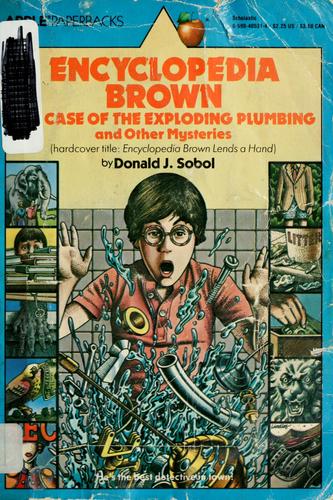
A parent might reach for this book when their child shows a love for puzzles and riddles, or when they want to encourage logical thinking in a fun, accessible way. The Encyclopedia Brown series follows the adventures of Leroy Brown, a ten-year-old boy detective whose encyclopedic knowledge helps him solve local mysteries. Each chapter is a self-contained case, challenging the reader to spot the clue and solve the crime before flipping to the solutions page in the back. The book reinforces themes of justice, intellectual confidence, and the power of observation. Its short, episodic format is perfect for readers aged 7-10, especially those building reading stamina or who enjoy an interactive experience that makes them feel smart and capable.
The primary sensitive topic is bullying, personified by Bugs Meany. However, it is handled with humor and is never truly threatening. Encyclopedia and Sally always triumph through intelligence and logic, not violence. The resolutions are straightforward and consistently reinforce a clear sense of justice. The book has a secular, problem-solving focus with no deep or complex emotional themes like grief or family strife.
Your experience helps other parents find the right book.
Sign in to write a reviewThe ideal reader is a 7 to 10-year-old who loves puzzles, brain teasers, and feeling clever. It's particularly well-suited for children who are logical thinkers or for those a parent wants to encourage in critical thinking. It is an excellent series for a child who champions intelligence over physical strength and enjoys seeing bullies get their comeuppance through brainpower. The format also makes it a great fit for reluctant readers who are intimidated by longer, continuous narratives.
No preparation is needed. The book can be read cold. However, a parent might want to explain the unique format to the child: read the story, pause to think about the solution, and then check the answers in the back. This makes it an excellent book for a shared reading experience, with parent and child working together to solve the cases. A parent has a child who is constantly asking "why?" or trying to figure out how things work. The parent is looking for a book that is more interactive than a simple story and wants to build their child's confidence in problem-solving. Another trigger: "My child loves mysteries but is easily frightened by anything too serious or scary."
A younger reader (age 7-8) will enjoy the stories and the humor, likely needing help to spot the logical flaw. They experience the joy of the "aha!" moment when the solution is revealed. An older reader (age 9-10) will more actively engage in the challenge, deliberately rereading the text to find the clue on their own. For them, the pride comes from solving the puzzle independently, appreciating the cleverness of the mystery's construction.
Its primary differentiator is the unique, interactive solve-it-yourself format. Unlike most mystery novels where the reader is a passive spectator, Encyclopedia Brown explicitly invites the reader to become the detective. The episodic, self-contained chapter structure makes the book highly accessible and allows for a sense of accomplishment ten times over, which is a powerful motivator for developing readers.
This collection contains ten short, self-contained mysteries featuring boy detective Leroy "Encyclopedia" Brown. Operating his own detective agency out of the family garage, Encyclopedia, with the help of his friend and partner Sally Kimball, solves a variety of neighborhood cases for 25 cents a day. The cases often involve outsmarting the local bully, Bugs Meany, and his gang. Each chapter presents all the facts and clues, challenging the reader to identify the single inconsistency or logical flaw that solves the crime before checking the solution in the book's concluding section.
This overview was generated by AI based on the book's content and reviews, and may not capture every nuance.