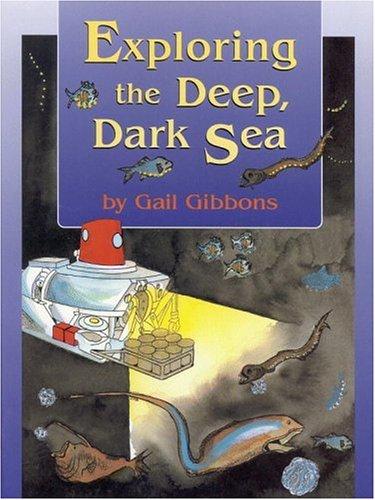
A parent might reach for this book when their child starts asking big questions about what lies at the bottom of the ocean. Exploring the Deep, Dark Sea takes young readers on a scientific expedition in a submersible, traveling down through the ocean's layers: from the sunlit zone to the crushing pressure and complete darkness of the deepest trenches. Along the way, Gail Gibbons' signature clear prose and labeled illustrations introduce the amazing, and sometimes strange, creatures that have adapted to life in this extreme environment. For children aged 4 to 8, it’s a perfect introduction to oceanography, sparking curiosity and wonder about a hidden world and celebrating the spirit of discovery.
None. The book is a straightforward scientific exploration.
A 5 to 7 year old who is captivated by science, nature, and exploration. This child is asking 'why' and 'how' about the natural world, is fascinated by submarines and strange animals, and is ready for introductory scientific vocabulary presented in a clear, visual context.
Your experience helps other parents find the right book.
Sign in to write a reviewNo preparation is needed. The book is self-contained and expertly explains all concepts for a young audience. A parent might want to be ready for follow-up questions, as the book is excellent at sparking curiosity that goes beyond its pages. Previewing the look of some of the deep-sea fish may be helpful for parents of particularly sensitive children. A parent has heard their child ask, "What's at the very bottom of the ocean?" or has a child who just visited an aquarium and is now obsessed with the weirdest, most interesting sea creatures. The child is showing a burgeoning interest in STEM topics.
A 4-year-old will primarily engage with the pictures: the cool submarine, the journey format, and the visually striking creatures. They will grasp the basic concept of going deeper into a darker place. A 7 or 8-year-old will absorb the scientific vocabulary (e.g., bioluminescence, submersible, hydrothermal vents) and the distinct characteristics of each ocean zone. They can use this book as a foundation for a school report or further inquiry.
Gail Gibbons' primary strength is making complex subjects accessible without oversimplifying them. Unlike narrative-driven science books (like The Magic School Bus), this book is a clear, illustrated guide. Its focus on the journey through distinct, labeled zones and its detailed diagrams of the submersible and its equipment sets it apart as a foundational text on ocean exploration for the youngest readers.
This nonfiction picture book follows the journey of a deep sea submersible, like Alvin, as it descends through the layers of the ocean. The book is structured by depth, starting in the familiar Sunlight Zone and moving progressively deeper through the Twilight Zone, Midnight Zone, and finally to the Abyssal and Hadal Zones at the ocean floor. Each section describes the changing conditions (light, pressure, temperature) and showcases the unique marine life adapted to that environment, such as the anglerfish, vampire squid, and tube worms near hydrothermal vents.
This overview was generated by AI based on the book's content and reviews, and may not capture every nuance.