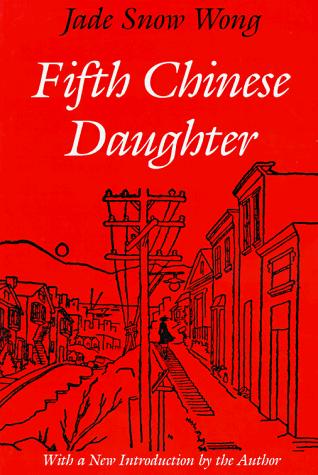
For families exploring cultural identity, this book shares a poignant journey of growing up Chinese American, navigating traditions, and finding your place.
A parent might reach for this book when their teenager is struggling to balance family expectations with their own desire for independence, especially within an immigrant or bicultural context. Originally published in 1950 and updated, Fifth Chinese Daughter is the true story of Jade Snow Wong, who grew up in San Francisco's Chinatown in the 1920s and 30s. The memoir details her journey of navigating the vast differences between her traditional Chinese home life and the individualistic American world outside. It thoughtfully explores themes of identity, belonging, familial duty, and the courage it takes to forge your own path. For teens feeling misunderstood or caught between two worlds, this classic memoir provides a powerful historical mirror and a hopeful model of resilience and self-discovery.
Protagonist experiences loneliness and a deep sense of being misunderstood by her family.
Cultural Content GapMild
Details specific cultural and family norms of a past era that may be unfamiliar to modern readers.
Sensitive Topics
The book deals directly with cultural conflict, sexism within the family, and racism. The approach is a personal, secular recollection of lived experiences. The sexism is presented as a deeply ingrained cultural norm that the protagonist must actively fight against (for example, her brothers' education is prioritized over hers). Racism is depicted as a systemic barrier and a source of personal pain. The resolution is realistic and hopeful: Jade Snow achieves independence and her family eventually comes to respect her accomplishments, but the underlying tensions are not magically erased. She carves out her own space rather than changing the entire system.
Ideal Reader
The ideal reader is a teen aged 14-18, particularly a first or second generation immigrant, who feels caught between their parents' culture and American society. It's for the thoughtful adolescent who is questioning family rules, exploring their own ambitions, and trying to understand their place in the world. It would resonate deeply with a young person who feels their creative or academic passions are not understood or valued by their family.
Parent Prep
No specific pages require pre-reading, but parents should be prepared for the book's critique of the author's traditional upbringing. The father is portrayed as stern and unyielding for much of the book. It's an opportunity to discuss how parenting styles and cultural expectations have evolved. A brief discussion about life for Chinese Americans in the early 20th century could provide helpful context for the societal racism Jade Snow encounters. A parent hears their teen say, "You don't get it! Your rules don't make sense here," or expresses deep frustration about double standards at home versus at school. The parent may feel their child is pulling away from family traditions and may be worried about losing their connection.
Age Experience
A younger teen (13-15) will likely connect most with the struggle for personal freedom: wanting to go to college, make her own choices, and argue with her parents. An older teen (16-18) will better appreciate the nuanced exploration of bicultural identity, the subtle and overt racism, the feminist undertones of her fight for education, and the historical significance of her story as a foundational piece of Asian American literature.
What Makes It Special
Unlike many contemporary young adult novels on the topic, this is a primary source document. Its uniqueness lies in its historical perspective, offering an authentic window into the Chinese American experience in the first half of the 20th century. It stands as a pioneering work of Asian American literature, making it not just a personal story but a culturally significant one. The focus on becoming an artist and entrepreneur as the pathway to independence is also a distinct and inspiring element.
Read plot summary
This autobiography chronicles the life of Jade Snow Wong, born in the 1920s in San Francisco's Chinatown. The narrative follows her upbringing in a traditional, patriarchal Chinese family where children are expected to be obedient and subservient. As she navigates the American school system, she grapples with the conflicting values of American individualism and Chinese filial piety. The book details her fight to attend junior college and then Mills College against her father's wishes, her experiences working as a domestic helper to pay for her education, and her eventual success and independence as a celebrated ceramic artist. The story is a profound exploration of forging a hybrid identity that honors both her Chinese heritage and her American aspirations.
This overview was generated by AI based on the book's content and reviews, and may not capture every nuance.
Discussion Prompts
1
Jade Snow often felt she had to choose between being 'Chinese' and being 'American'. Do you think she successfully combined the two identities by the end of the book? How?
2
When Jade Snow wins an award, her father is not outwardly proud, telling her she has 'not learned humility.' What does this scene reveal about the differences in their values? How would you have felt in her position?
3
Why was pursuing pottery so important for Jade Snow's independence? What did her ability to create and sell her art represent beyond just making a living?
4
Jade Snow works as a live-in domestic helper to pay for college. How did this experience of living with an American family change her perspective on her own family and herself?
5
Throughout the book, Jade Snow's parents believe they are doing what is best for her. Can you identify a moment where you understood their perspective, even if you disagreed with it?