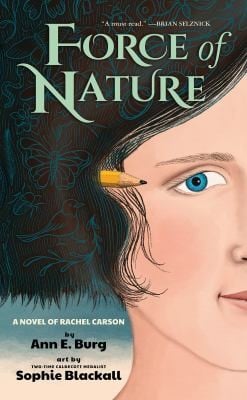
Ann E. Burg's "Force of Nature" offers a lyrical and intimate portrayal of Rachel Carson, the pioneering environmentalist. The book traces Carson's life from her childhood fascination with the natural world, through her education and career, to her groundbreaking work on "Silent Spring" and the subsequent launch of the modern environmental movement. It highlights her personal struggles and triumphs, framed by the perspectives of those close to her, making her journey feel deeply personal.
The book addresses the serious topic of environmental degradation and the impact of harmful chemicals through Carson's scientific inquiry and advocacy, rather than graphic depictions. The "harmful practices" are presented as a problem to be solved through courage and scientific truth. The blank verse format lends a thoughtful, almost meditative quality to these discussions, making complex topics accessible.
The emotional arc is one of quiet determination leading to profound impact. It starts with a sense of wonder and curiosity, moves through periods of challenge and perseverance, and culminates in an empowering message of advocacy and hope for change. It's largely uplifting and inspiring, despite the serious subject matter.
This book is specifically for children who are curious about nature, science, and history, particularly those interested in how individuals can make a significant difference in the world. It's also well-suited for readers who appreciate lyrical language and a biographical approach to storytelling. A parent might reach for this when their child shows an interest in environmental issues, asks about famous scientists, or needs an example of perseverance and standing up for what's right. It's also a good choice for introducing the concept of activism and the history behind environmental protection.
Parents might want to briefly introduce Rachel Carson's historical context if their child is unfamiliar. Discussion could focus on the scientific process, the importance of questioning, and the impact of human actions on the environment. No particularly scary or upsetting scenes, but the implications of environmental harm are present. Younger readers (ages 4-7) could enjoy this as a read-aloud, appreciating the story of a nature-loving hero, while older readers (ages 8-11) will be able to grasp the complexities of Carson's scientific work, the societal resistance she faced, and the historical significance of her contributions, engaging more deeply with the themes of justice and advocacy. The blank verse makes it accessible yet sophisticated. The blank verse format sets it apart, offering a poetic and intimate portrayal that differs from traditional prose biographies. By focusing on the perspectives of family and friends, it provides a more personal and emotionally resonant look at Carson's life, making her journey feel more immediate and relatable to young readers.