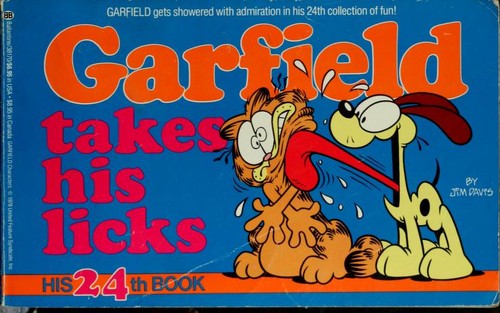
A parent might reach for this book when their child needs a pure, uncomplicated dose of humor, especially a reluctant reader who is intimidated by chapter books. "Garfield Weighs In" is a classic collection of comic strips featuring the world-famous orange cat who loves lasagna, hates Mondays, and has mastered the art of doing as little as possible. The book's humor comes from Garfield's sarcastic observations and his funny interactions with his perpetually exasperated owner, Jon, and the cluelessly happy dog, Odie. It celebrates simple joys and a guilt-free acceptance of oneself, flaws and all. The visual, bite-sized format is perfect for emerging independent readers and provides a fun, low-pressure reading experience for any child who loves a good laugh.
The topic of dieting and body weight is present throughout, but it is handled in a completely comedic and satirical way. It is not intended as a serious commentary on health or body image. The conflict is slapstick and light. There are no other significant sensitive topics.
Your experience helps other parents find the right book.
Sign in to write a reviewThe ideal reader is a child aged 7-10 who is a reluctant reader or new to independent reading. They respond well to visual humor, sarcasm, and animal characters. This is a perfect book for a child who needs a "brain break" from more demanding texts or who wants to see that reading can be purely for fun.
No preparation is needed. The humor is straightforward and timeless. A parent might briefly explain the concept of a comic strip if the format is new to the child. It's also worth noting to a child that Garfield's relationship with dieting is just for laughs and not a model for real-life health. A parent has just heard their child say, "I hate reading," or has noticed them struggling with and abandoning chapter books. The parent is looking for something highly engaging, visually driven, and funny to rebuild reading confidence and associate books with pleasure.
A younger reader (6-8) will primarily enjoy the visual gags and slapstick comedy, like Garfield's expressive face or his physical interactions with Odie. An older reader (9-12) will better appreciate the verbal humor, the sarcasm in Garfield's thought bubbles, and the relatable irony of Jon's situation. The older child connects more with the wit, while the younger child connects with the action.
In an era of graphic novels with complex story arcs and deep emotional themes (e.g., Raina Telgemeier), Garfield offers a return to the simple, episodic gag-a-day format. Its uniqueness lies in its purity as entertainment. It doesn't try to teach a big lesson; it simply aims to deliver a reliable laugh in every three-panel strip through its iconic, unapologetically flawed main character.
This book is a collection of classic three-panel "Garfield" comic strips, not a linear narrative. The central theme, as suggested by the title, revolves around Garfield's weight and his owner Jon's futile attempts to put him on a diet. Recurring gags include Garfield's schemes to steal food, his sarcastic inner monologue, his disdain for exercise and Mondays, his pranks on the dog Odie (often kicking him off the table), and his general gluttony and laziness, all of which are presented as endearing and humorous traits.
This overview was generated by AI based on the book's content and reviews, and may not capture every nuance.