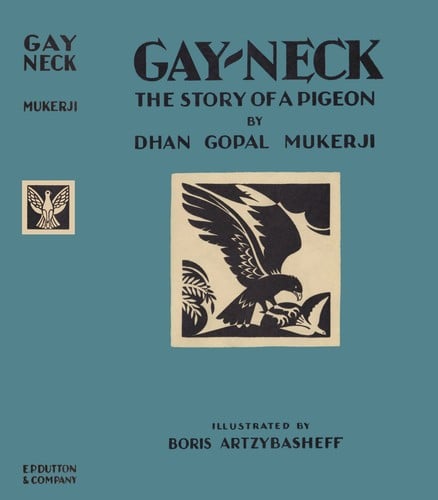
Dhan Gopal Mukerji's Newbery Medal-winning 'Gay-Neck, the Story of a Pigeon' is a profound and adventurous tale that transcends a simple animal story. It follows the life of a remarkable Indian pigeon, Gay-Neck, from his birth in the Himalayas to his traumatic service as a messenger during World War I. The narrative is unique, offering chapters from both the young boy's perspective and Gay-Neck's own first-person account, allowing readers to deeply connect with the animal's experiences and emotions.
The book handles sensitive topics with grace and depth. Gay-Neck experiences the death of his parents early on, and later, the profound psychological trauma of war, witnessing the death of a fellow pigeon and being chased by 'machine-eagles.' These experiences lead to a period of fear and inability to fly, which is sensitively addressed through his healing at a Buddhist lamasery. The spiritual cleansing from 'hate and fear' is a central, metaphorical element, offering a gentle way to discuss processing trauma and finding peace.
The emotional arc begins with the wonder of nature and the joy of companionship, moves through periods of intense fear and loss, and ultimately culminates in a hopeful journey of healing and return. It's a story of resilience, loyalty, and the deep connection between humans and the natural world.
This book is specifically for children who are ready for a more complex narrative, perhaps those who have experienced a significant change or loss, or who are curious about history and different cultures. A parent might reach for this when their child is grappling with fear, needs a story about overcoming adversity, or is showing an interest in animals and world history.
Parents should be prepared to discuss the themes of death, war, and trauma, as these are prominent. The spiritual aspects of the lamasery offer a good opportunity to talk about different ways people find healing and peace. Younger readers (6-7) will benefit from it as a read-aloud, focusing on the adventure and animal bond, while older children (8-9) can engage more deeply with the historical context and emotional complexities independently. What sets it apart is its unique blend of animal adventure, historical fiction, and a sensitive exploration of trauma and spiritual healing, all from a non-Western cultural perspective, making it a truly enriching and thought-provoking read.