Wonderlit Review
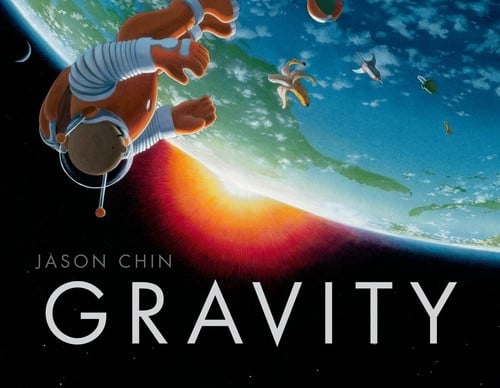
Jason Chin's "Gravity" is a stellar example of how to make complex scientific concepts accessible and engaging for young readers. The book introduces the fundamental principles of gravity, explaining what it is and how it influences everything from an apple falling from a tree to the orbits of planets in our solar system. While the provided data is sparse, Chin's reputation for meticulously researched and stunningly illustrated nonfiction suggests a visual feast that complements the clear, concise text.
This book handles the scientific topic directly, presenting facts and explanations in a straightforward yet wondrous manner. There are no sensitive topics to navigate; its purpose is purely educational and inspiring. The emotional arc is one of gentle discovery, starting with common observations and building towards a deeper understanding and appreciation for the natural laws governing our universe. It's designed to spark curiosity and foster a sense of wonder, leaving readers with a clearer grasp of an invisible, yet omnipresent, force.
"Gravity" is specifically for children aged 4-11 who are naturally curious about how the world works, enjoy science, or are beginning to ask fundamental "why" questions about physical phenomena. It's also an excellent resource for parents and educators seeking high-quality, accessible science explanations. A parent would reach for this book when a child asks about why things fall, why they can jump but don't float away, or expresses an interest in space, planets, or basic physics. It's perfect for supplementing early science education at home or in the classroom.
No specific scenes require previewing, as the content is purely informative. Parents might consider having a few simple objects on hand to drop or a ball to throw to demonstrate gravity's effects in a tangible way. Younger children (4-6) will primarily engage with the captivating illustrations and grasp the basic idea of gravity's pull, while older children (7-11) will likely delve deeper into the explanations of planetary orbits and the broader implications of this force. What makes this book stand out, typical of Jason Chin's work, is its combination of artistic excellence and scientific clarity, making a potentially abstract topic concrete and fascinating.
Discussion Prompts
If Your Family Enjoyed This

Reviews
No reviews yet. Be the first to share how this book landed with your family.