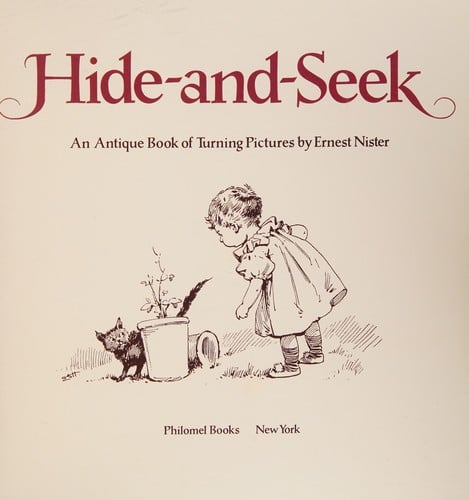
About This Book
A collection of poems featuring revolving picture mechanisms.
Wonderlit Review
Ernest Nister's "Hide-and-seek" is a delightful journey back in time, presenting a faithful reproduction of an antique children's book. The core appeal lies in its ingenious revolving picture mechanisms, a hallmark of Nister's work. Each page features a short, gentle poem, often about nature, animals, or simple childhood observations, accompanied by an illustration. With a pull of a tab or a turn of a wheel, the illustration magically transforms, revealing a new scene or character. This interactive element is not merely a gimmick; it's central to the book's charm and encourages active engagement from the reader.
The book handles its themes with a light, whimsical touch. The poems are simple and comforting, focusing on the joy of discovery and the wonders of the everyday world. There are no heavy or sensitive topics; the emotional arc is consistently gentle and uplifting. This book is specifically for children who enjoy interactive elements, those who appreciate the tactile experience of a physical book, and families looking for a nostalgic or unique read-aloud. A parent might reach for this when they want to share a piece of literary history, introduce classic poetry in an engaging way, or simply provide a quiet, wondrous activity.
For younger children (ages 4-6), the changing pictures will be the primary draw, sparking curiosity and wonder. Parents can guide them through the poems, pointing out rhymes and new vocabulary. Older children (ages 7-11) can appreciate the cleverness of the mechanisms and the historical context of such books, perhaps even trying to understand how they work. There are no scenes to preview, as the content is universally gentle. What sets this book apart from modern interactive books is its antique aesthetic and the mechanical ingenuity, offering a different kind of 'magic' than today's digital or elaborate pop-up books. It's a testament to timeless wonder and simple pleasures.
If Your Family Enjoyed This
Reviews
No reviews yet. Be the first to share how this book landed with your family.