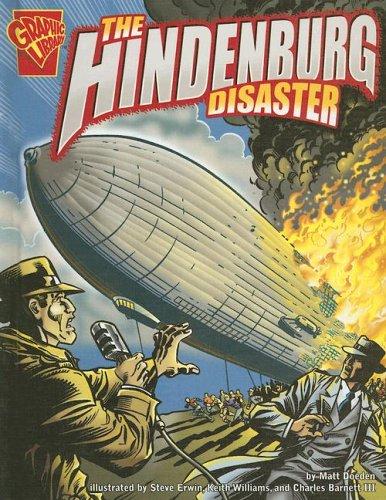
For the curious child fascinated by historical events and how they unfold, this graphic novel vividly reconstructs the tragic Hindenburg airship disaster.
A parent might reach for this book when their curious child becomes fascinated with historical disasters or is a visual learner who struggles with dense nonfiction texts. This graphic novel vividly recounts the 1937 Hindenburg airship disaster, from its majestic beginnings to its fiery, tragic end. The book handles themes of wonder and technological achievement alongside the stark realities of fear, bravery, and loss. For ages 9 to 14, it's an excellent choice because the graphic format makes a complex and sobering historical event accessible and engaging, providing a factual foundation for understanding a significant moment in 20th century history.
The book factually addresses the tragic loss of life and the end of the airship era.
Sensitive Topics
The book deals directly and factually with death and a mass casualty event. The approach is secular and historical, focusing on what happened without religious or metaphorical framing. Dozens of people die, and this is stated clearly. The resolution is realistic and historical, explaining the impact of the disaster on the future of airship travel. The historical context includes visible swastikas on the airship's tailfins, which are presented without political commentary as a fact of the era.
Ideal Reader
The ideal reader is a 10-to-13-year-old who is fascinated by machinery, engineering, and historical events, but may be a reluctant reader of traditional prose. They are drawn to dramatic, true stories and will appreciate the visual storytelling that makes the event feel immediate and understandable.
Parent Prep
Parents should preview the central section depicting the explosion and fire. The images of the burning ship and people in peril are graphic and could be frightening for more sensitive children. Context is helpful. A parent might want to explain that this event really happened and discuss why it was such a shocking tragedy at the time. A parent has a child who is obsessed with disaster videos on the internet or just heard the phrase "Oh, the humanity!" and asked what it meant. The parent wants to provide a structured, factual, and less sensationalized account of a historical event to satisfy that curiosity.
Age Experience
A 9-year-old will likely focus on the action and drama: the giant, cool-looking airship, the big explosion, and the survival aspect. A 14-year-old will be better equipped to absorb the historical context, the scientific debate over hydrogen versus helium, the pre-WWII political undertones, and the full weight of the human tragedy.
What Makes It Special
Its graphic novel format is the key differentiator. Many nonfiction books cover the Hindenburg, but this one leverages sequential art to make the timeline of the disaster crystal clear and emotionally impactful. It excels at showing, not just telling, the scale and speed of the tragedy, making it uniquely accessible for visual learners.
Read plot summary
This graphic nonfiction book chronicles the final voyage of the German airship Hindenburg in May 1937. It details the journey across the Atlantic, introduces key crew members and passengers, and builds tension as the airship attempts to land in Lakehurst, New Jersey, during a thunderstorm. The narrative climaxes with the sudden explosion and catastrophic fire, depicting the chaos and the desperate attempts of those on board and on the ground to survive. The book concludes with the aftermath, casualty counts, and a summary of the investigations into the cause of the disaster.
This overview was generated by AI based on the book's content and reviews, and may not capture every nuance.
Discussion Prompts
1
The book shows the swastika on the Hindenburg's tail. Why was that symbol on a German airship in 1937, and why is it important for a historical book to show details like that accurately?
2
Several theories about the cause of the fire are mentioned at the end. Based on the evidence the book provides, which theory do you find most convincing, and why?
3
Look at the pages that show the moment of the explosion. How do the artists use color, panel shapes, and character expressions to create a feeling of chaos and panic?
4
Reporter Herbert Morrison's emotional radio broadcast is a famous part of the Hindenburg story. Do you think news reporters today should show their emotions when covering a tragedy? Why or why not?