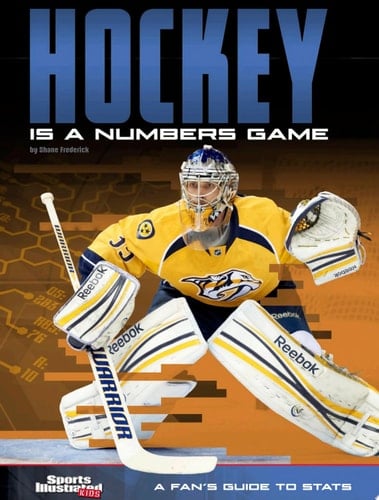
About This Book
What does true plus/minus have to do with hockey greatness? More than you think. In this fun and smart look at basketball, you will discover stories and uncover facts that will help you better understand and enjoy every pass, dribble, and shot all the more.
Wonderlit Review
This slim nonfiction chapter book, "Hockey Is a Numbers Game," offers young readers an accessible introduction to the world of sports statistics, specifically within the context of hockey. It breaks down complex ideas, such as the 'true plus/minus' stat, into understandable terms, using engaging language and likely supportive illustrations (though not explicitly detailed in the data). The book's primary purpose is to explain concepts and build vocabulary related to hockey analytics, empowering young fans to appreciate the nuances of the game beyond just goals and saves.
The emotional arc is one of discovery and intellectual engagement, starting with a basic love for the sport and progressing to a deeper, more analytical understanding. It's ideal for children who are already hockey fans and show a budding interest in numbers, or for reluctant readers who might be drawn in by a high-interest sports topic. A parent might reach for this book when their child starts asking more in-depth questions about player performance, or when looking for a non-fiction book that aligns with a child's passion for sports. While the stated age range is 4-11, the conceptual nature of statistics makes it more suitable for the upper end of that range, perhaps 7-11, where children can better grasp abstract numerical relationships. Younger children might enjoy the general facts but may not fully internalize the statistical concepts. Parents should preview the book if they are unfamiliar with hockey terminology, but no sensitive topics require specific preparation. What sets this book apart is its dedicated focus on the statistical aspect of hockey, rather than just general rules or history, offering a unique angle for young sports enthusiasts.
If Your Family Enjoyed This

Reviews
No reviews yet. Be the first to share how this book landed with your family.