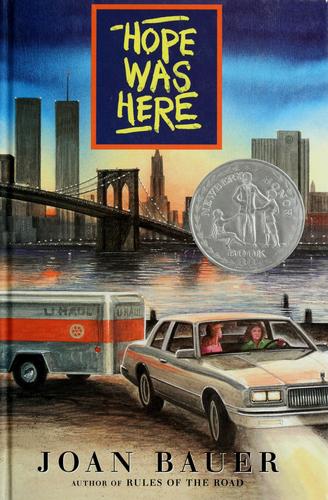
For teens grappling with big changes and feeling like an outsider, this book celebrates finding your voice, belonging, and making a difference in a new community.
A parent should reach for this book when their tween or young teen is facing a big move, feeling like a perpetual outsider, or starting to grapple with the idea that the world isn't always fair. The story follows sixteen-year-old Hope, a cynical but resilient waitress who has moved all her life with her aunt, a talented diner cook. When they land in a small Wisconsin town to help run a diner for G.T. Stoop, a man battling leukemia, Hope finds herself unexpectedly involved in his campaign for mayor against a corrupt incumbent. Through this fight, she discovers the meaning of community, integrity, and home. It’s a warm, witty, and deeply moving story about finding your voice and planting roots, perfect for kids 10-14 who need a reminder that hope is an action.
A beloved character's death from illness is a key part of the book's resolution.
Sensitive Topics
The book deals directly with terminal illness. G.T.'s leukemia is a central, non-metaphorical part of the plot. The approach is secular, focusing on community support, personal strength, and medical realities. The resolution is bittersweet and realistic, not shying away from loss, but ultimately frames it within a profoundly hopeful context. Hope's abandonment by her mother is also a direct, recurring theme handled with emotional honesty.
Ideal Reader
An 11 to 14-year-old who feels disconnected, is experiencing a move, or is navigating feelings of being an outsider. It's also perfect for a young person developing a strong sense of justice and fairness who wants to see a teen character make a tangible difference in the adult world. A reader who enjoys character-driven stories with wit and warmth will connect deeply.
Parent Prep
Parents should be prepared to discuss G.T.'s illness. It is handled gracefully but honestly, including its progression and eventual outcome. Knowing this storyline in advance will help parents frame conversations about loss, legacy, and fighting for what you believe in even when the future is uncertain. The book can be read cold, but this context is helpful. A parent hears their child say, "What's the point of trying? Nothing ever changes," or, "I'll never really fit in here." The child might be feeling powerless in the face of a big family change (like a move) or cynical about the state of the world.
Age Experience
A younger reader (10-11) will likely focus on the fun diner setting, the clear good-versus-evil political race, and Hope's friendships. An older reader (12-14) will more fully appreciate the nuances of Hope's identity issues, the bittersweet nature of the ending, her complex feelings about her mother, and the deeper themes of political integrity, civic duty, and what it truly means to build a home.
What Makes It Special
Unlike many coming-of-age stories that confine the protagonist's growth to school and peer groups, "Hope was Here" uniquely frames the search for belonging within the context of civic engagement. It powerfully suggests that becoming part of a community involves actively working to improve it. The diner setting also provides a unique, comforting, and constant backdrop for the emotional and political drama.
Read plot summary
Sixteen-year-old Hope (born Tulip) and her aunt Addie, a chef, move to Mulhoney, Wisconsin, to manage the Welcome Stairways Diner. The diner's owner, G.T. Stoop, is a kind man suffering from leukemia. When G.T. decides to challenge the corrupt and long-serving mayor, Hope, Addie, and the diner staff are pulled into the whirlwind of local politics. Hope, a deeply skilled waitress who has felt like an outsider her whole life due to constant moves and an absent mother, slowly finds a home, a group of friends, a budding romance, and a father figure in G.T. as she uses her talents to help his campaign.
This overview was generated by AI based on the book's content and reviews, and may not capture every nuance.
Discussion Prompts
1
Addie tells Hope, 'Hope is a verb... an action word.' What does she mean by this? Can you find a specific moment in the story where Hope (the character) actively creates hope for herself or someone else?
2
G.T. decides to run for mayor even though he is very sick. Why do you think he makes this choice? What does his campaign teach Hope about what it means to be part of a community?
3
Hope is an expert at being a waitress. How do the skills she uses at the diner (like reading customers and staying organized) help her in the political campaign and in her personal life?
4
At the end of the book, Hope has experienced both a great victory and a great loss. How do you think these events change her definition of what 'home' means?