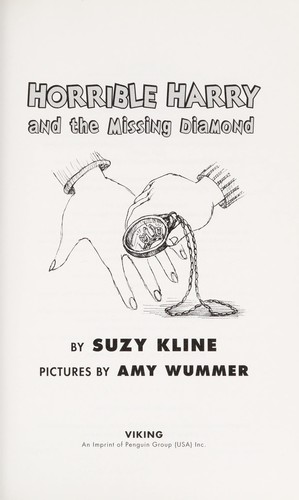
A parent might reach for this book when their child is navigating the social complexities of early friendships, especially when accusations and misunderstandings arise. "Horrible Harry and the Missing Diamond" presents a low-stakes school mystery that cleverly explores big themes of honesty, loyalty, and jumping to conclusions. When a valuable diamond ring goes missing from their teacher's desk, everyone suspects the class troublemaker, Harry. His best friend, Doug, must decide whether to trust Harry or believe the evidence. This early chapter book is perfect for newly independent readers, using humor and relatable classroom dynamics to model how to be a good friend, solve problems collaboratively, and understand the importance of telling the truth.
The primary sensitive topic is the accusation of theft. It is handled directly and realistically within a school setting. The resolution is hopeful and reinforces the importance of due process and not jumping to conclusions. There are no religious or metaphorical elements.
Your experience helps other parents find the right book.
Sign in to write a reviewA newly independent reader, age 6 to 8, who enjoys school-based stories and simple mysteries. Specifically, this is for a child who has experienced or witnessed a friend being wrongly accused, or a child who tends to jump to conclusions about others. It helps them process the feelings of loyalty, doubt, and fairness.
No specific prep is needed. The book is a straightforward early chapter book that can be read cold. The situations are highly relatable for elementary school students and the resolution is positive and clear. A parent has heard their child say, "Everyone says he did it, so it must be true," or has seen their child struggle with whether to defend a friend who is in trouble. The child might be grappling with peer pressure or the concept of evidence versus gossip.
A 6-year-old will enjoy the straightforward mystery and the "Horrible Harry" antics. They will grasp the core message of "don't steal" and "be a good friend." An 8 or 9-year-old will appreciate the nuances of Doug's internal conflict more deeply, understanding the difficulty of maintaining loyalty when evidence seems to point another way. They will also connect with the collaborative problem-solving aspect.
Unlike many early chapter book mysteries that focus solely on the puzzle, this book's unique strength lies in its emotional core. It centers the story on the narrator's loyalty and internal struggle, making it less about the "who" and more about the "what do you do when your friend is in trouble?" It is a character-driven mystery about the ethics of friendship.
During a geology lesson, third-grade teacher Miss Mackle shows her class her grandmother's diamond ring. The ring disappears, and circumstantial evidence points to the class prankster, Horrible Harry. Harry's best friend and the story's narrator, Doug, struggles with believing his friend versus the mounting evidence. Doug and their friend Mary work together to investigate, ultimately discovering the ring fell into the class ant farm, clearing Harry's name and reinforcing their friendship.
This overview was generated by AI based on the book's content and reviews, and may not capture every nuance.
