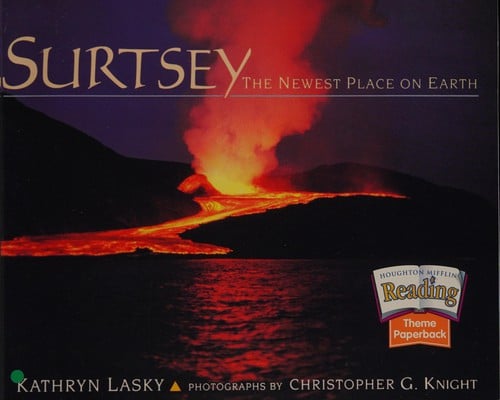
About This Book
Describes the formation, naming, and colonization of the twenty-seven-year-old volcanic island Surtsey and how the first animals and plants became established there.
Wonderlit Review
This nonfiction chapter book offers a fascinating look at Surtsey, a real-life volcanic island that emerged from the sea off the coast of Iceland. The narrative details the island's dramatic birth through volcanic activity, its naming, and the subsequent scientific study of how life began to colonize its barren landscape. It handles complex scientific topics like geology and ecology in an accessible way, making it suitable for young readers. The emotional arc is one of wonder and discovery, highlighting the incredible power of natural processes and the resilience of life. This book is specifically for children aged 7-11 who have a budding interest in science, particularly earth science, volcanoes, or ecosystems. A parent might reach for this when their child asks 'How are islands made?' or 'Where do new animals come from?' or if they are looking for supplementary material for a school project on geology or biology. Parents should be prepared to discuss scientific terms and concepts, though the book is likely to explain them clearly. Younger readers (7-9) will appreciate the awe-inspiring facts and the story of life's beginnings, while older readers (10-11) can delve deeper into the ecological and geological processes. What makes this book different is its focus on a specific, relatively recent natural event, offering a tangible case study of island formation and ecological succession.
If Your Family Enjoyed This
Reviews
No reviews yet. Be the first to share how this book landed with your family.