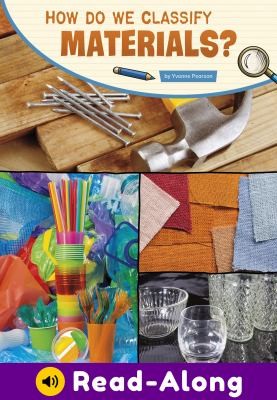
About This Book
A parent might reach for this book when their child starts asking endless questions about what things are made of and why they are different. "How Do We Classify Materials?" is a perfect introduction to scientific thinking, turning a child's natural curiosity into a fun exploration. It clearly explains how scientists sort everyday objects based on their properties, like hardness, flexibility, and magnetism, using simple text and vibrant photos. The book fosters a sense of wonder and empowers kids with new vocabulary to describe the world. It’s an excellent choice for early elementary students, providing a solid, screen-free foundation for STEM concepts.
What Parents Should Know
Sensitive Topics
No sensitive topics.
Ideal Reader
A 6- to 8-year-old who is in a big "why?" phase and shows an interest in sorting objects. This child is a concrete thinker who benefits from clear visual examples and enjoys hands-on learning. It is perfect for a budding scientist who wants to understand the rules of the world around them.
Parent Prep
No preparation is needed; the book can be read cold. For an enhanced experience, a parent could gather a few simple household items mentioned in the book (a magnet, a sponge, a plastic spoon, a coin) to let the child test the properties themselves as they read along. The parent's child has just started sorting their LEGOs by color, their toy cars by size, or asks, "What is glass made of?" or "Why is the window see-through but the wall isn't?" The child is showing an innate desire to categorize their world.
Reviews
No reviews yet — be the first!
Your experience helps other parents find the right book.
Sign in to write a review


