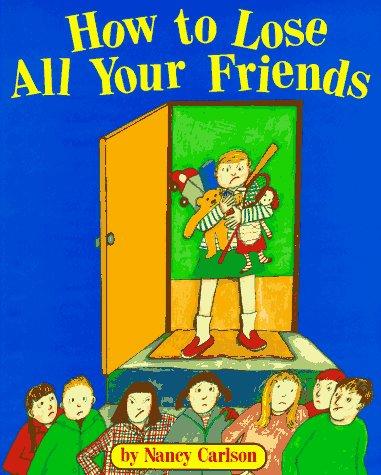
About This Book
A funny guide on how to lose friends and make enemies.
Wonderlit Review
Nancy L. Carlson's "How to Lose All Your Friends" cleverly uses reverse psychology and humor to teach valuable social lessons. Instead of directly instructing children on how to be a good friend, the book presents a series of comically bad behaviors, such as not sharing, interrupting, or being bossy, and illustrates how these actions lead to losing friends. The tone is light and playful, ensuring that the message is delivered without being preachy or shaming. The emotional arc is gentle throughout, focusing on the consequences of actions in a way that encourages self-reflection rather than fear. This book is ideal for children aged 4-8 who are beginning to navigate social dynamics, whether they are struggling with making friends, exhibiting challenging behaviors, or simply need a humorous reminder about kindness and empathy. A parent might reach for this book when their child is having difficulty sharing, being a good sport, or understanding social cues. Parents should be prepared to discuss the 'bad' examples and guide their child to understand the 'good' alternatives. Younger children will enjoy the silly scenarios and illustrations, while older children might grasp the subtle humor and the underlying message more readily. What sets this book apart is its unique, inverse approach; it's a refreshing take on social skills books that often tell children what to do, by instead showing them what *not* to do in a memorable and engaging way.
If Your Family Enjoyed This

Reviews
No reviews yet. Be the first to share how this book landed with your family.