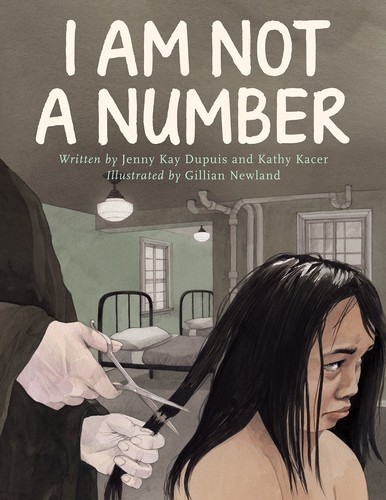
Reach for this book when your child starts noticing social inequalities or when you want to introduce the concept of cultural resilience through a personal lens. It is an essential tool for discussing difficult history, specifically the residential school system, in a way that emphasizes the strength of the human spirit. The story follows young Irene as she is taken from her family and forced to attend a school designed to strip away her Indigenous identity. While the themes of systemic racism and forced separation are heavy, the book focuses on Irene's quiet bravery and her family's determination to stay connected. It is best suited for children ages 7 to 11 who are ready for honest conversations about justice, heritage, and the importance of one's name and history.
Your experience helps other parents find the right book.
Sign in to write a reviewForced separation of children from their parents and siblings.
Strict, cold authority figures and a scene involving physical punishment with an iron.
Introduces terms like 'Indian agent' and 'reserve' that require historical context.
The book deals directly with systemic racism, forced assimilation, and emotional abuse. The approach is realistic and historical rather than metaphorical. While the school environment is grim and oppressive, the resolution is hopeful and grounded in family resistance.
A 9-year-old who is beginning to ask questions about why different groups of people are treated unfairly in history books, or a child who feels a strong connection to their own family traditions and would be moved by the threat of losing them.
Parents should be prepared for the scene where Irene is punished with a hot iron for speaking her native tongue. It is handled with care but is emotionally striking. Reading the historical note at the end first will provide necessary context. A child asking, 'Why did the government let them take the kids away?' or a child expressing fear about being separated from their parents.
Younger children (7-8) will focus on the sadness of being away from home and the unfairness of the teacher. Older children (10-11) will grasp the larger implications of cultural erasure and the systemic nature of the school.
Unlike many books on this topic that end with the child simply enduring, this book highlights a specific act of parental resistance and the reclamation of a name as a form of power.
Based on the life of co-author Jenny Kay Dupuis's grandmother, the story follows eight-year-old Irene, an Anishinaabe girl taken by an Indian agent to a residential school. At the school, her hair is cut, her traditional clothes are taken, and she is told she is now 'Number 759.' The narrative tracks her arrival, the harsh discipline she faces for speaking her language, and her eventual return home for summer, where her parents hatch a plan to hide the children from the agent.
This overview was generated by AI based on the book's content and reviews, and may not capture every nuance.