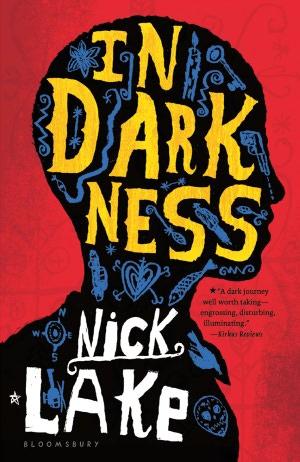
Reach for this book when your teenager is grappling with the complexity of global inequality or seeking a story that honors the resilience of the human spirit during unimaginable crises. This is a visceral and demanding read that alternates between a boy trapped in the rubble of the 2010 Haiti earthquake and the historical revolution led by Toussaint L'Ouverture. It deals honestly with the darkness of gang violence and poverty, while offering a profound meditation on how history and heritage can provide a lifeline in moments of despair. Due to its intense realism and descriptions of violence, it is best suited for older teens capable of processing heavy emotional weight. It is a powerful choice for fostering empathy and understanding the deep roots of Caribbean history through a contemporary lens.
Your experience helps other parents find the right book.
Sign in to write a reviewHigh-stakes survival situation involving being buried alive under rubble.
Multiple deaths including family members and peers.
Themes of extreme poverty, loss of family, and systemic oppression.
Occasional strong language consistent with the setting and characters.
The book deals with extreme poverty, gang violence, and death with unflinching realism. The approach is both direct in its depiction of the earthquake's aftermath and metaphysical in its connection between Shorty and Toussaint. The resolution is realistic yet offers a glimmer of spiritual and physical survival.
A mature high schooler interested in social justice, history, or global current events who is looking for a story that doesn't sugarcoat the realities of life in a marginalized community.
Parents should be aware of the graphic descriptions of gang-related violence and the physical toll of being trapped in rubble. Contextualizing the 2010 Haiti earthquake and the 1804 Revolution will enhance the reading experience. A parent might hear their child questioning why some parts of the world face such disproportionate suffering, or notice their child becoming more aware of systemic cycles of violence.
Younger teens (14) will focus on the survival elements and the tension of the earthquake. Older teens (17-18) will better grasp the complex parallels between the two protagonists and the sociopolitical critiques offered by Lake.
Unlike many disaster stories, this book rejects the 'victim' narrative by imbuing its protagonist with a rich, albeit difficult, history and a spiritual connection to a revolutionary icon.
Shorty, a fifteen-year-old gang member, is buried alive in a collapsed hospital after the Haitian earthquake. As he faces starvation and dehydration, his consciousness weaves between his own traumatic childhood in the slums and the life of Toussaint L'Ouverture, the leader of the Haitian Revolution. The dual narrative explores how the ghosts of the past inhabit the struggles of the present.
This overview was generated by AI based on the book's content and reviews, and may not capture every nuance.