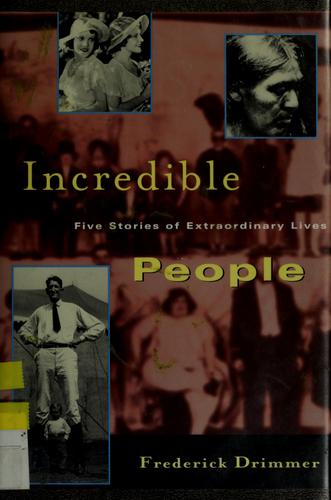
This chapter book, "Incredible People," offers a collection of five biographical sketches focusing on individuals whose lives were significantly shaped by their physical and cultural differences from prevailing Western societal norms. The book introduces figures such as Jack Erlich, the Hilton Siamese twins, Ota Benga, Ishi, and the Wild Boy of France. It handles sensitive topics by presenting their stories factually, allowing readers to understand the historical context of how "differences" were perceived and often exploited or misunderstood.
The emotional arc is largely informative and contemplative, aiming to foster empathy and understanding rather than eliciting strong emotional reactions, though some stories are inherently poignant. It starts with the premise of extraordinary lives and aims to conclude with a broader understanding of human diversity and resilience.
This book is specifically for children aged 8-11 who are ready for non-fiction chapter books and can engage with complex historical and social themes. While the stated age range is 4-11, the content and length make it more suitable for late elementary readers, or as a read-aloud for slightly younger children with significant parental guidance. A parent might reach for this book when their child expresses curiosity about unique individuals, or when discussing themes of difference, acceptance, and historical injustices.
Parents should preview the content, especially the stories of Ota Benga and Ishi, which involve themes of exploitation, cultural displacement, and the dehumanizing treatment of indigenous people. It's crucial to frame these stories within their historical context and discuss how societal views have evolved. The book provides an excellent springboard for conversations about empathy, human rights, and the importance of respecting all individuals, regardless of their physical or cultural background. What makes it different from other books on similar topics is its focus on a diverse range of "extraordinary" individuals from different historical periods, offering a broader perspective on human variation and societal response.