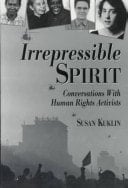
Susan Kuklin's "Irrepressible Spirit" compiles powerful personal testimonies from individuals who have suffered human rights abuses and interviews with dedicated human rights workers, including those from Human Rights Watch. It offers a direct, human-centered look at global injustices and the efforts to combat them. The book handles sensitive topics like human rights abuses, violence, and discrimination through these personal accounts. Given its 1996 publication date and the target audience, it likely presents these topics with an age-appropriate filter, focusing on the human impact and resilience rather than graphic details. It is secular in its approach, focusing on universal human dignity. The emotional arc likely moves from acknowledging suffering and injustice to highlighting resilience, bravery, and the hope found in activism, aiming to be empowering and thought-provoking. This book is for mature late elementary to middle school readers (ages 9-14) who are curious about global issues, social justice, and the real-world impact of human rights. It is particularly suited for children who are developing a sense of empathy for others beyond their immediate experience and are ready to engage with serious non-fiction. A parent would reach for this book when their child expresses interest in current events, social justice, or global issues; when they are learning about history or civics; or when they are ready for a deeper understanding of empathy, fairness, and the importance of standing up for others. It is an excellent resource for discussing difficult but important topics. Parents should be prepared to discuss the challenging realities of human rights abuses, discrimination, and violence. While the book is likely age-appropriate in its presentation, the underlying themes are serious. It is an excellent opportunity to talk about global citizenship, empathy, and how individuals can make a difference. Younger readers (under 9) might find the content too heavy or abstract, despite the publisher's stated age range. Older elementary and middle schoolers will be better equipped to process the personal stories and understand the broader implications of human rights. The chapter book format and page count also lean towards older readers. Its strength lies in its direct, first-person accounts, offering a powerful human connection to abstract concepts of human rights. It moves beyond general definitions to show the lived experiences of those affected and those who fight for change, making it a compelling and personal introduction to the topic.