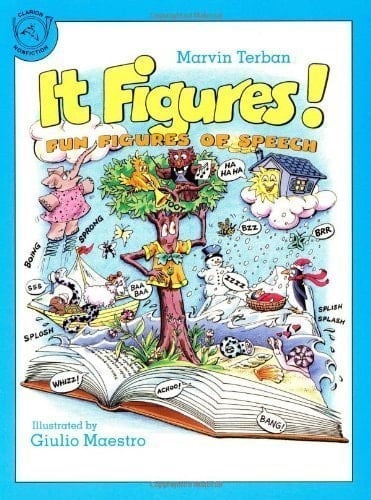
About This Book
Introduces and explains common figures of speech such as metaphors, similes, personification, and hyperbole with guidelines for their use and illustrative examples.
Wonderlit Review
Marvin Terban's 'It Figures! Fun Figures of Speech' is a foundational text for introducing young readers to the intricacies and delights of the English language. Published in 1993, this chapter book, though older, remains highly relevant for its clear, concise explanations of common figures of speech such as similes, metaphors, personification, and hyperbole. The book's strength lies in its direct approach, providing definitions alongside numerous illustrative examples that help children grasp these abstract concepts. It doesn't shy away from the complexity but presents it in an approachable, often humorous, manner.
The emotional arc of the book is one of discovery and empowerment. Children start with a basic understanding of language and, through the book's guidance, gain confidence in identifying and even creating their own figurative language. It handles the topic directly, focusing on the mechanics and creative potential of language without delving into sensitive topics. This book is specifically for children who are beginning to read independently or for younger children who enjoy learning about words and how they work, particularly those in early to late elementary school (ages 4-11). A parent would reach for this book when their child asks 'What does that mean?' about an idiom, or when a teacher assigns a project on figurative language. It's also perfect for parents who want to foster a love for language and improve their child's writing and comprehension skills.
Parents should preview the book to familiarize themselves with the examples, which can then be used as springboards for further discussion or for creating new examples together. Younger children (4-6) will benefit most from it as a read-aloud, focusing on a few concepts at a time, while older children (7-11) can engage with it independently, using it as a reference or a fun challenge. What makes it different from other language books is its singular focus on figures of speech, providing a comprehensive yet digestible overview that many general grammar books might only touch upon briefly. Its emphasis on 'fun' makes it less like a textbook and more like a playful exploration.
If Your Family Enjoyed This
Reviews
No reviews yet. Be the first to share how this book landed with your family.